Estonia, Latvia, and Lithuania sit in a line along the eastern shore of the Baltic Sea. Three countries covering an area about two and a half times the size of Ireland, stacked north to south with open borders between them. The geography does the planning for you: you drive south and the countries change around you, one at a time, without a single highway checkpoint or currency swap.
This route covers all three in fourteen days. It starts in Tallinn, where medieval walls sit next to a growing startup scene. It cuts through the Estonian countryside to Tartu, a university town shaped by its 1632 academy. Then it crosses into Latvia, where Riga’s Art Nouveau district holds more ornate facades per block than anywhere else on the continent, and the countryside holds waterfall villages that most guidebooks skip. Lithuania comes last: the amber coast at Palanga, the sand dunes of the Curonian Spit, and a finish among the baroque churches of Vilnius, one of the largest old towns in Northern Europe.
Every stop gets two or three nights. That’s enough time to park the car, walk everywhere, and take one day trip without repacking every morning. No drive on this route exceeds four hours, and most are under three. The short distances are the point. You spend time in places instead of between them.
You can run it in reverse, starting from Vilnius, if your flights work better that way. May through September is the window. June brings white nights, with daylight stretching past eleven in the evening. September is the quieter choice: warm seas, amber washing ashore after storms, and empty old towns. Prices across all three countries sit well below Western European levels. A full lunch with drinks runs under ten euros outside the capitals. Budget travelers manage on fifty to eighty euros a day; mid-range, including a rental car split between two, lands around one hundred to a hundred and fifty.
Getting around
A rental car is the only way to reach Kuldīga and the coast comfortably. Between capitals, Lux Express and FlixBus are easy alternatives.
Best time
May through September. June brings white nights; September is quieter with warm seas. Winter suits Christmas markets and introspection.
Budget
Budget travelers manage on fifty to eighty euros a day. Mid-range, including a two-way rental car split, lands around a hundred to a hundred and fifty.
Duration
Fourteen days across six stops, with two to three nights each. No drive exceeds four hours, and most are under three.
Tallinn
Old Town on foot. Kadriorg Palace and park. Pirita beach at sunset. Day trip to Lahemaa for bogs and manor houses.
Tartu
Estonia's university town. The AHHAA Science Centre. Estonian National Museum. A quieter, more local rhythm.
Riga
Art Nouveau district walk. Central Market in a former Zeppelin hangar. Day trip to Jurmala beach. Riga Forest Bobsled Complex.
Kuldiga
Ventas Rumba: Europe's widest natural waterfall. Old town. Brides' Hill. A Latvian village that hasn't been discovered yet.
Palanga
Baltic seaside resort. Amber Museum in a neo-Renaissance palace. The wooden pier stretching into the sea. Birute Park and the dune landscape.
Vilnius
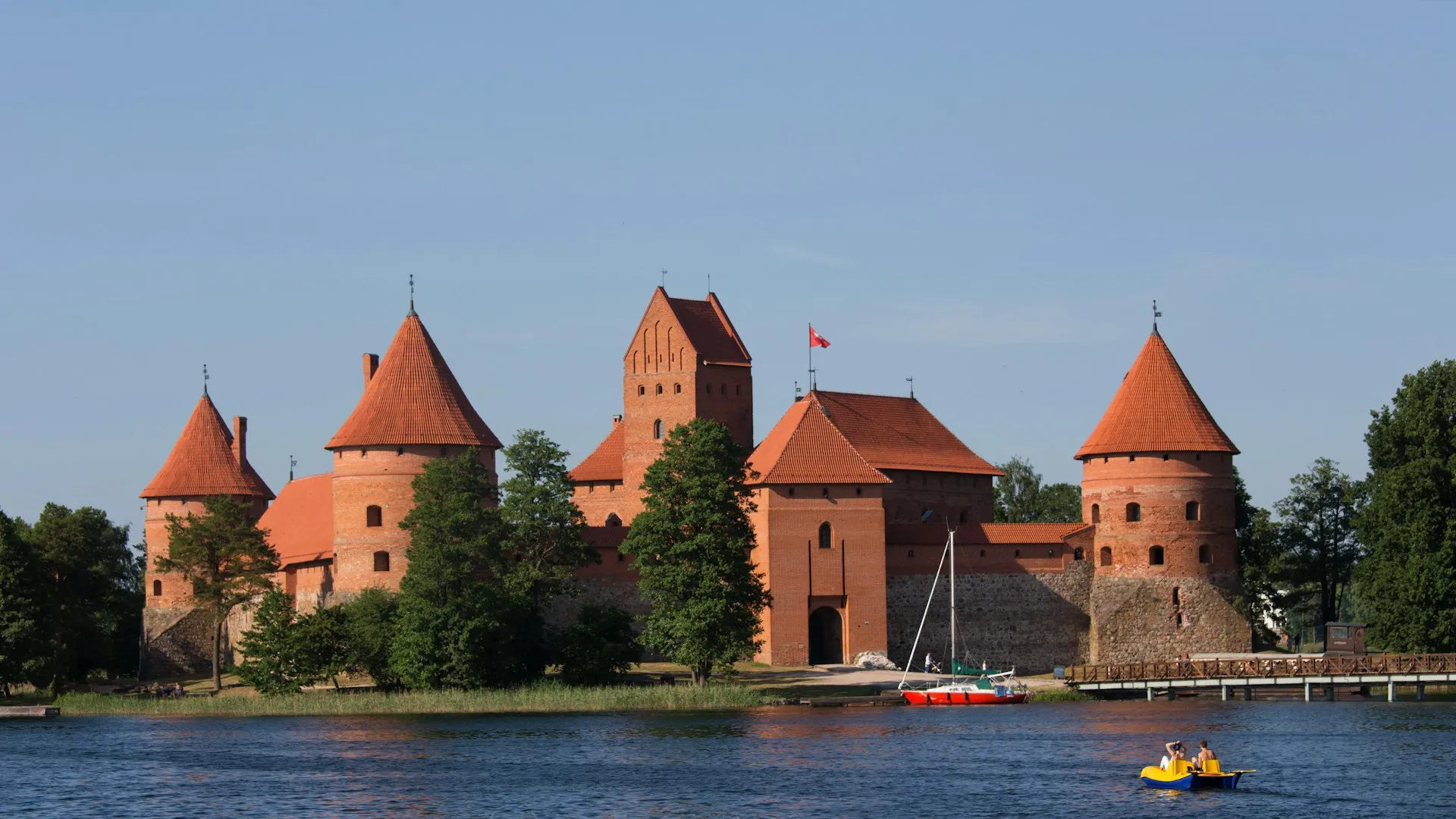
Old Town and Uzupis. Trakai Island Castle. Hill of Crosses day trip. Vilnius street art. The bohemian end of the journey.
Tallinn
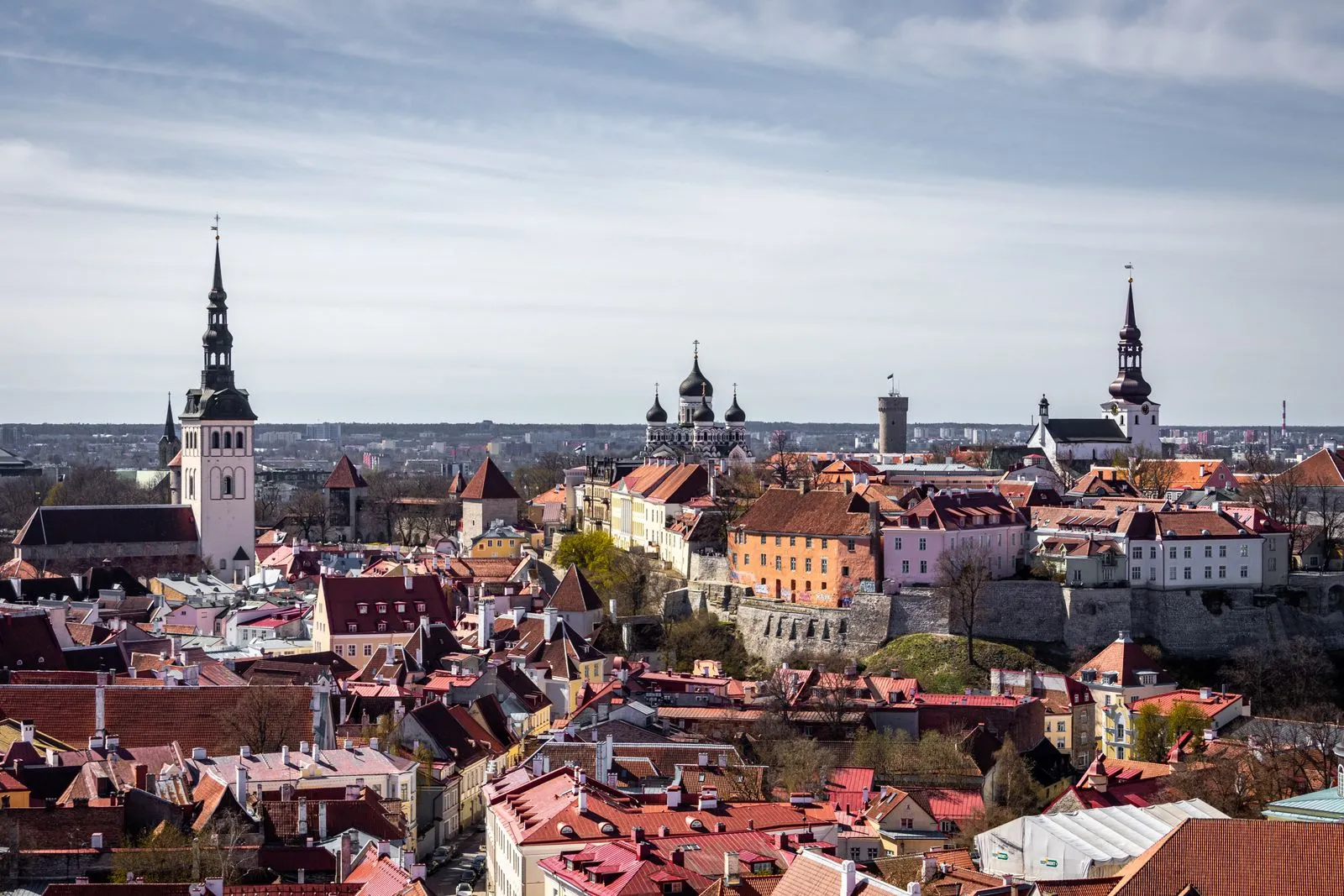
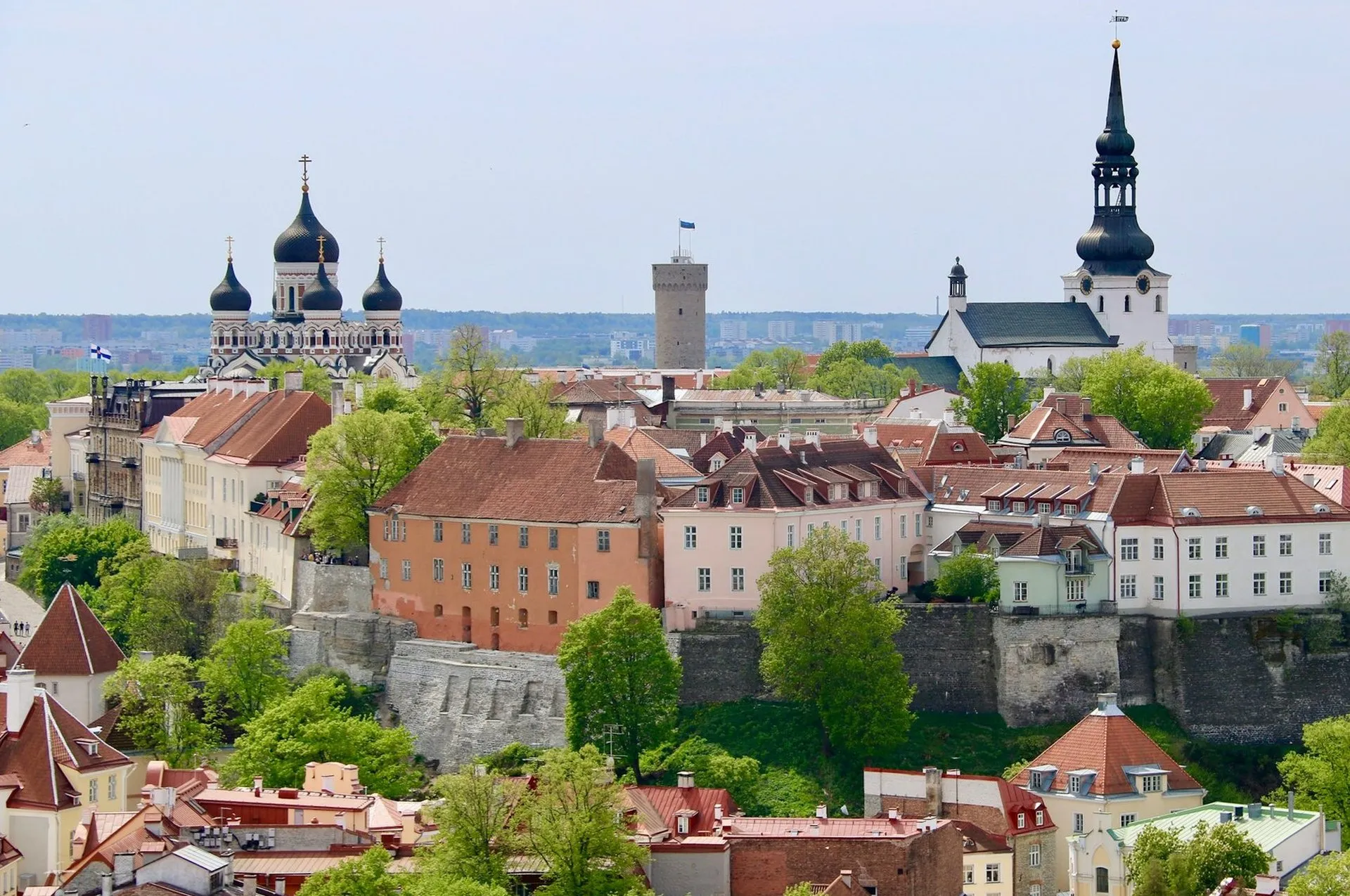
Three days is the right amount for Tallinn. The walled old town is compact enough to walk in an afternoon, but the details reward slower exploration: the guildhalls on Pikk Street, the hidden courtyards behind the Russian quarter, the view from the town wall towers at sunset. Outside the walls, Kadriorg Palace and park make a half-day trip, and Pirita beach gives you the Baltic Sea at its most accessible. If you have a third day, drive to Lahemaa National Park for bog boardwalks, waterfall trails, and manor houses that date back to the German nobility.
Tartu
Estonia’s second city runs at a different pace. The university, founded in 1632, shapes the town’s character: bookshops, cafes, and a student population that gives the center a youthful, slightly bohemian feel. The AHHAA Science Centre is worth an afternoon, and the Estonian National Museum tells the country’s story from a wooden farmhouse to a digital republic. Tartu is also the last stop before Latvia, and the drive south through the Estonian countryside gives you the transition between the two countries at ground level.
Riga
Riga holds the largest collection of Art Nouveau architecture in the world: over eight hundred buildings, mostly in the Quiet Center district, with floral reliefs, mythological figures, and ornate ironwork. The Central Market operates out of five former Zeppelin hangars and is the best place to taste Latvian food at local prices. A day trip to Jurmala, thirty kilometers along the coast, gives you the Baltic’s longest white-sand beach. For something different, the Forest Bobsled Complex outside the city offers a summer bobsled track through pine forest.
Kuldīga
Kuldīga is a town that makes you want to slow down. The Ventas Rumba, Europe’s widest natural waterfall, stretches across the river in a long, low curtain of water. The old town has wooden houses, cobblestone streets, and almost no tourists. Brides’ Hill, a local landmark, offers a view over the river valley. Kuldīga hasn’t been discovered by mass tourism yet, which makes the detour from the main highway worth it.
Palanga
Lithuania’s main seaside resort has a split personality. In July and August, the town fills with holidaymakers and the main strip runs loud and bright. We have a full guide to Palanga and the amber coast. Outside peak season, it quiets down to a small coastal town with a beautiful neo-Renaissance palace that houses the Amber Museum. The wooden pier stretches far into the Baltic Sea, and Birutė Park and the surrounding dune landscape give you a sense of the Lithuanian coast at its most natural.
Vilnius
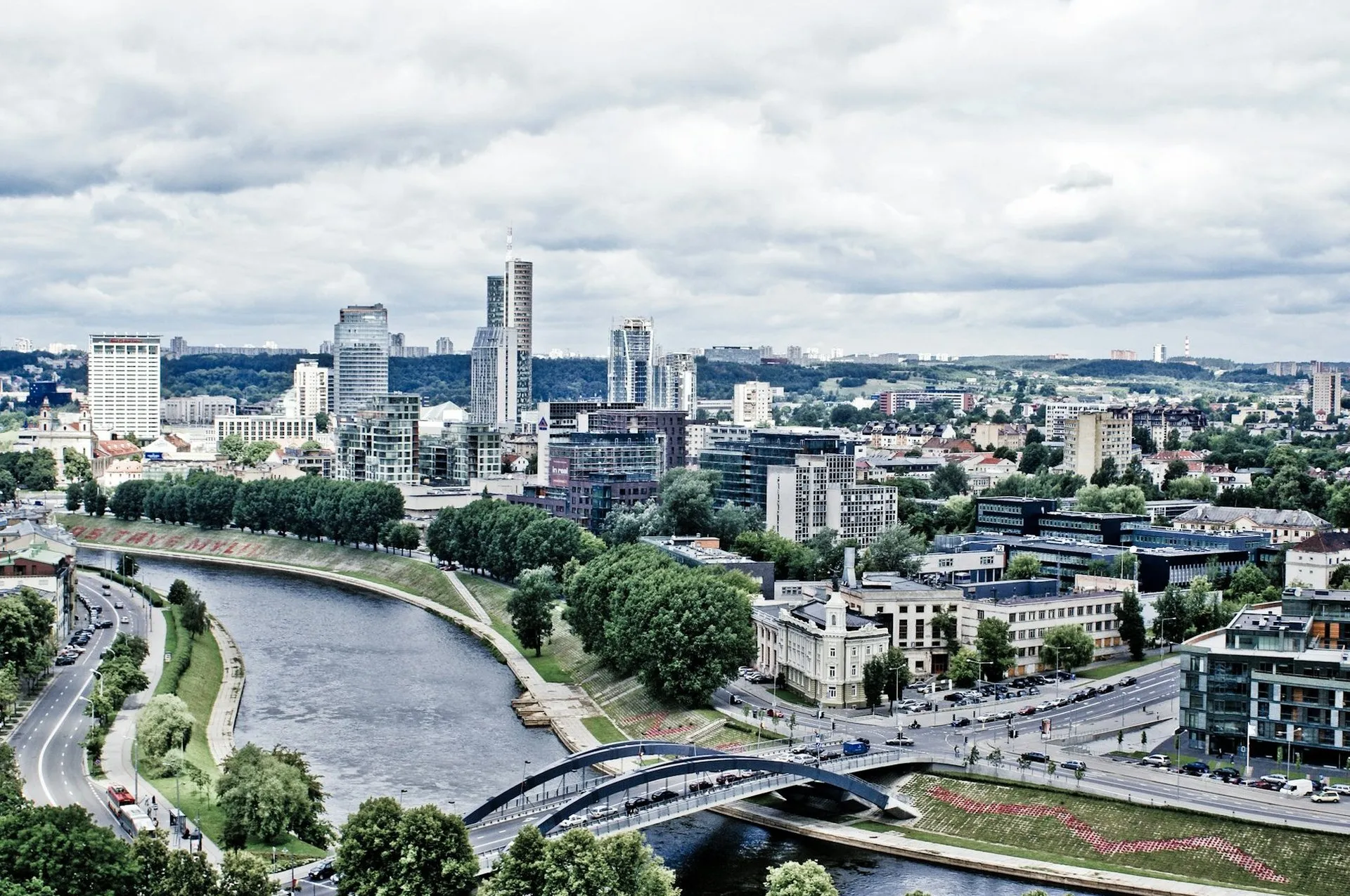
Vilnius is the largest old town in Northern Europe, and three days barely covers it. We cover the full three-day plan separately. The baroque churches, the steep narrow streets, and the self-declared Republic of Užupis give the center a layered, bohemian character. A day trip to Trakai takes you to a fourteenth-century island castle on Lake Galvė. For something more sobering, the Hill of Crosses, a pilgrimage site covered with over a hundred thousand crosses, lies an hour north. Vilnius is also a good place to end the trip: the food scene has grown fast, the craft breweries are worth exploring, and the slower pace gives you time to think about what you’ve seen.
Before you drive
6 readingsGetting around
Renting a car is the only way to reach Kuldīga and the coast comfortably. Roads are quiet and well-maintained, and no vignettes or tolls are required. Between capitals, Lux Express and FlixBus are comfortable alternatives if you’d rather not drive city to city. Tallinn to Riga takes about four and a half hours by bus; Riga to Vilnius takes about four.
When to go
May through September is prime season. June brings white nights: daylight until nearly midnight, and the old towns lit by a sun that barely dips below the horizon. July and August are warmest but busiest. September is the insider’s pick: warm seas, amber washing ashore after storms, and old towns emptier than any summer month. Winter works too, if you want Christmas markets and a quiet, introspective atmosphere.
Where to sleep
Book Riga and Vilnius old-town stays early for summer weekends. In Palanga, July fills fast: reserve ahead or visit in late August when the crowds thin. Kuldīga has small guesthouses that rarely need booking more than a few days out. Tallinn’s old town has options at every price level, and Tartu’s hotel scene caters to the university crowd with clean, affordable rooms.
Budget
All three countries use the euro. Budget travelers manage on fifty to eighty euros per day, including accommodation and food. Mid-range runs one hundred to a hundred and fifty, with car rental split between two. Lunch specials outside the capitals often cost under ten euros. The best value is in local restaurants: a full meal with drinks at a market stall or neighborhood bistro costs a fraction of what you’d pay in Western Europe.
What to eat
Black bread, rye crispbread, smoked fish, forest mushrooms, juniper berries, and seasonal game. The Baltics sit between Nordic simplicity and Eastern European richness. In Estonia, try kama, a traditional grain mixture served with yogurt. In Latvia, the Central Market is the place for pelmeni and smoked eel. In Lithuania, cepelinai, potato dumplings stuffed with meat or cheese, are the national dish and worth every calorie.
Language
Estonian, Latvian, and Lithuanian are the official languages. None are related to each other: Estonian is Finno-Ugric and closer to Finnish, while Latvian and Lithuanian are Baltic, among the oldest living Indo-European language families. English is widely spoken in cities and tourist areas. A few local phrases always earn a smile, but you’ll never need them to get by.
This post contains affiliate links. Booking through them earns a small commission at no extra cost to you, and helps keep the site running. Thank you if you do.
Frequently asked questions
How long is the Grand Baltic Loop?
Fourteen days across six stops: Tallinn, Tartu, Riga, Kuldiga, Palanga, and Vilnius, with two to three nights at each. No drive on the route exceeds four hours, and most are under three.
Do I need a car for the Grand Baltic Loop?
A rental car is the only way to reach Kuldiga and the coast comfortably. Between the capitals, Lux Express and FlixBus are easy alternatives. Tallinn to Riga takes about four and a half hours by bus, and Riga to Vilnius about four.
What is the best time for the Grand Baltic Loop?
May through September is prime season. June brings white nights with daylight until nearly midnight. September is the insider's pick, with warm seas, amber washing ashore after storms, and old towns emptier than any summer month. Winter works for Christmas markets.