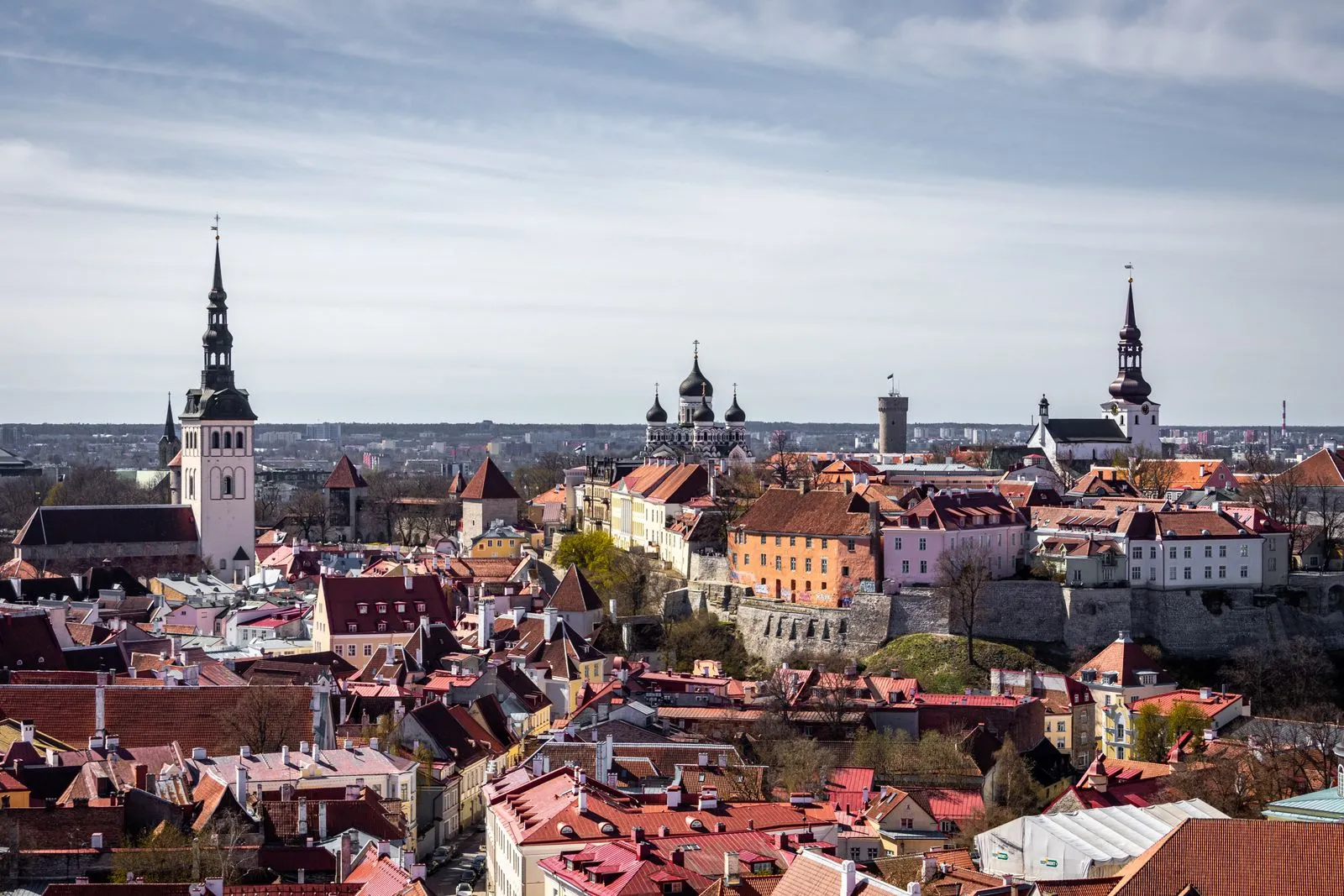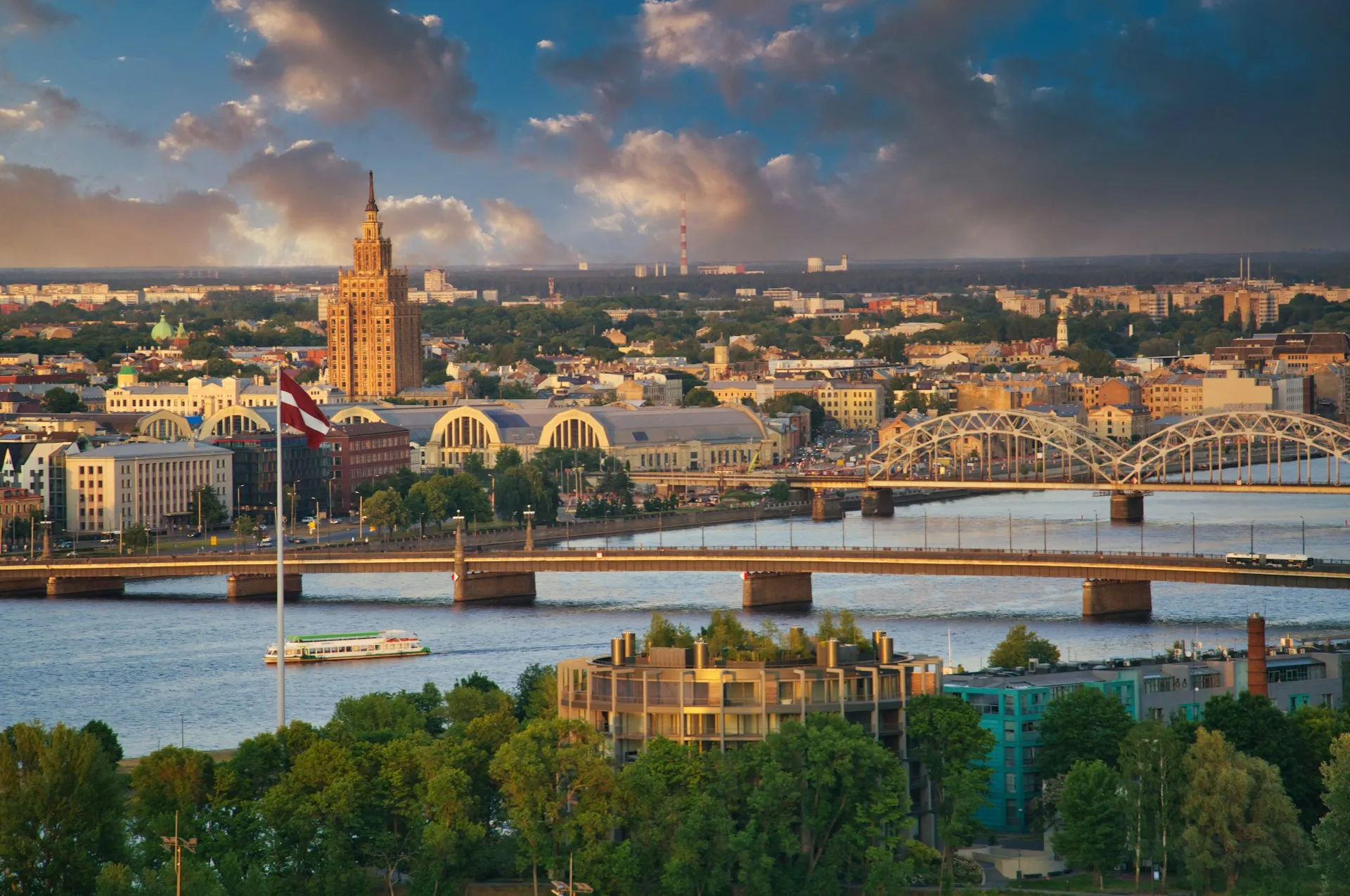
Riga sits where the Daugava River meets the Baltic Sea, and it has been a trading port for eight hundred years. The city has around 600,000 residents, making it the largest of the three Baltic capitals by a wide margin. The old town is a compact UNESCO site of cobblestone streets, medieval churches, and market squares, but the real surprise lies just outside the walls: an Art Nouveau district with over 800 decorated facades, the largest concentration in Europe. It is the natural anchor for any trip across Latvia, and both Sigulda and Jūrmala run as day trips from here.
The architecture is the main draw. Walking from the old town north into the Quiet Centre, you pass from Gothic and Baroque into a district where every block brings another ornate doorway, floral relief, or mythological figure carved into limestone. Riga’s Art Nouveau boom happened between 1899 and 1914, when the city was one of the Russian Empire’s wealthiest ports. Architects competed to outdo each other, and the result is a streetscape that feels like an open-air museum.
Beyond the old town and the Art Nouveau district, Riga spreads into neighbourhoods worth knowing. Andrejsala has turned its old harbour warehouses into restaurants and studios. Kipsala, on an island in the Daugava, preserves wooden houses that date to the 19th century. The Central Market occupies five pavilions that were built as Zeppelin hangars in the 1930s, and it remains the best place to see how Rigans actually eat and shop.
Three days gives you enough time to walk the old town slowly, explore the Art Nouveau streets, visit the market, and still have an afternoon for a museum or two. Two days covers the main sights. One day means choosing between the old town and everything else.
Getting there
Riga International Airport handles most Baltic flights. Buses from Tallinn take four hours, from Vilnius five. Trains from Sigulda take one hour.
Budget
Forty to eighty euros a night for accommodation. Meals run seven to twelve euros. A single tram ride costs 1.50 euros.
Best time
Late May through September for warm weather and long days. Midsummer (June 23-24) closes most of the city as locals leave for the countryside.
Duration
Two days covers the old town and Art Nouveau. Three days adds the market, museums, and neighbourhood walks.
The Old Town
Riga’s old town covers about 0.7 square kilometres, small enough to walk across in fifteen minutes. But the density of churches, guildhalls, and medieval streets means you should give it at least half a day. The area has been a UNESCO World Heritage Site since 1997.
The cathedral dates to 1211, making it one of the oldest stone buildings in the Baltics. The structure has been rebuilt and renovated so many times that it mixes Romanesque, Gothic, Baroque, and Art Nouveau elements in a single building. The tower has an observation deck with a view over the old town rooftops.
The nave is long and cool, with a notable 19th-century organ that still plays during services. Entry to the cathedral is free, but the tower costs a few euros. The square outside, Dome Square, is the largest open space in the old town and hosts outdoor concerts in summer.
The original guildhall was built in the 14th century for foreign merchants, and it became Riga’s most famous building. The Soviets destroyed it in 1941, and the site sat empty for fifty years. The reconstruction, completed in 1999, used old drawings and photographs to recreate the Renaissance facade and the astronomical clock above the entrance.
The interior is modern and hosts concerts and exhibitions. The building itself is the attraction: the ornate gables, the clock, and the coat of arms above the door. Evening visits are worth it when the facade lights up against the dark square.
Three Brothers, on Maza Pils iela, form the oldest complex of residential buildings in Riga. The oldest house dates to 1497, with a Dutch Renaissance gable and thick stone walls. The three buildings sit side by side, each from a different century, showing how Riga’s domestic architecture evolved from medieval to 18th-century styles.
The Swedish Gate, built in 1698, is the only surviving gate from the Swedish fortification wall. It connects two narrow streets and still has the original iron-studded door. The passage is barely wide enough for two people, and the stone walls show centuries of wear. Both stops take fifteen minutes each and sit within a ten-minute walk of each other.
The cobblestone streets radiate from Dome Square in irregular patterns. Vērņu iela runs north to the old town entrance, lined with shops and cafes. Jauniela and Vecpilsētas iela twist south past medieval courtyards and hidden passages. The Cat House, with its famous cat statues on the roof, sits on Mazā Pils iela and was built in 1909 as a protest against a neighbouring guild that refused the owner membership.
The old town is compact enough to wander without a plan. The streets reward slow walking: look up at the facades, duck into courtyards, and follow the narrow passages that connect parallel streets. Most of the old town can be covered in half a day, but an unhurried visit takes a full day with coffee stops.
Art Nouveau district
The Quiet Centre neighbourhood, north of the old town, holds over 800 Art Nouveau buildings, the largest concentration in Europe. The style is called Jugendstil in German and Jugendstils in Latvian, and it dominated Riga’s architecture between 1899 and 1914.
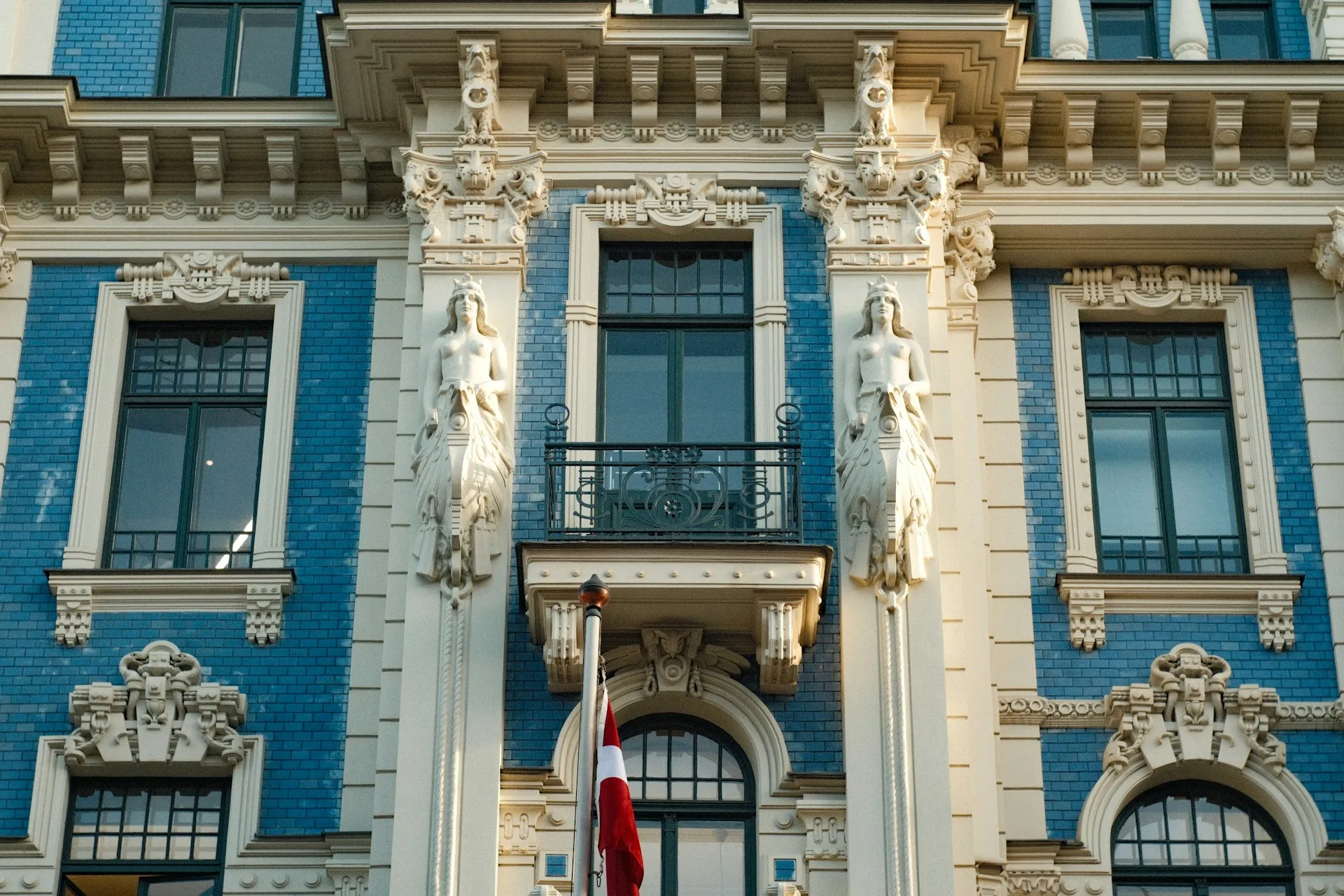
Alberta iela is the main Art Nouveau street and the most photogenic block in Riga. The street runs for about 300 metres, and almost every building on it was designed in the Jugendstil period. The architect Mikhail Eisenstein (father of the filmmaker Sergei Eisenstein) designed several of the most ornate facades, including houses 2, 4, and 8, which feature mythological figures, floral garlands, and elaborate gables.
Walk slowly and look up. The facades are dense with detail: lions, owls, female figures, geometric patterns, and ironwork balconies. The street is residential, so keep noise down in the evenings. The best light for photography comes in the morning, when the eastern facades catch the sun.
Elizabetes iela runs parallel to Alberta and holds the second concentration of Art Nouveau buildings. The street is wider and more commercial than Alberta, with shops and restaurants at ground level. The architectural decoration is just as rich: look for the building at number 10b, which features a dramatic stone relief of a woman with flowing hair, and number 33, with its carved forest scene.
The two streets together form a loop that takes about forty-five minutes on foot. Start at the corner of Alberta and Elizabetes, walk north along Alberta, cross to Elizabetes, and walk back south. The area between the two streets also has quieter side streets with Art Nouveau details worth discovering.
The museum occupies a restored apartment in one of the finest Art Nouveau buildings on Alberta iela (number 12). The flat belongs to a Russian merchant family from 1903, and the rooms show how the wealthy lived during Riga’s Art Nouveau boom. The furniture, wallpaper, and fixtures are period originals or careful reproductions.
Entry is around five euros. The visit takes about forty-five minutes. The building’s entrance hall alone, with its mosaic floor and ironwork staircase, is worth the price. The museum provides context for what you see on the street: the social history behind the architecture.
Dome Square
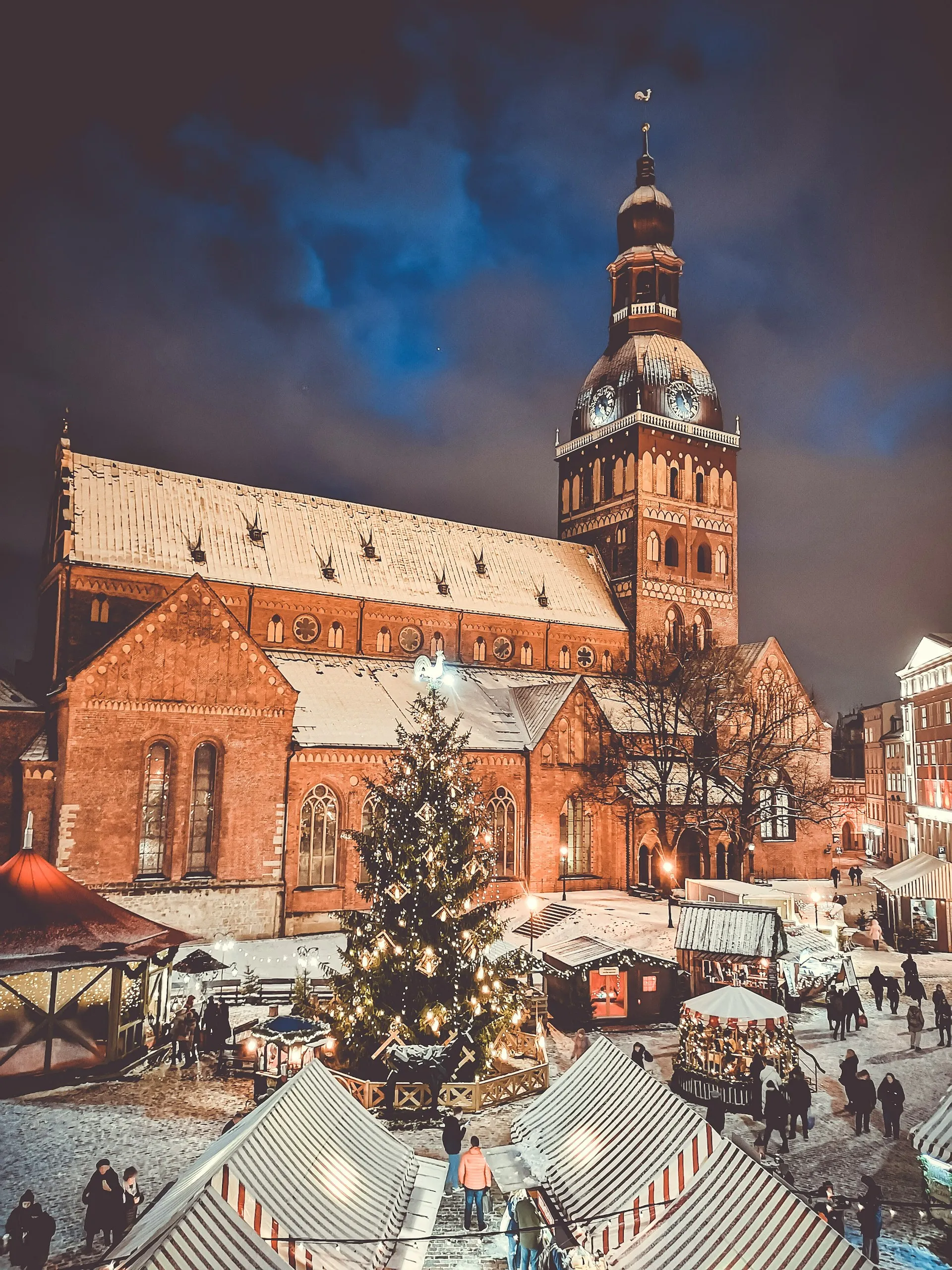
Dome Square sits at the centre of the old town and measures roughly 80 by 60 metres. The square takes its name from the cathedral, which forms its eastern edge. The western side is lined with cafe terraces and the House of the Blackheads. In summer, the square fills with market stalls and concert stages. In winter, it hosts a Christmas market with wooden huts and mulled wine.
The square’s shape is irregular, formed by the convergence of medieval streets. The buildings around it range from the 14th century to the early 20th century, and they share a scale that keeps the space human. No modern tower blocks interrupt the roofline. The effect is of a room open to the sky, enclosed by stone and tile.
Sit at a cafe on the western side and face the cathedral. The afternoon light hits the facade at an angle that highlights the Romanesque stonework. The square is busiest between 11:00 and 15:00, quieter in the early morning and after 18:00. A coffee or a beer on the terrace costs three to five euros.
The Daugava embankment
The Daugava River divides Riga into two halves. The old town sits on the west bank, and the newer city spreads east. The embankment along the river offers a long, flat walking path with views of both sides. The Vanšu Bridge, a cable-stayed bridge completed in 1981, carries cars, trams, cyclists, and pedestrians, and crossing it on foot gives a wide view down the river toward the old town.
Start at the old town embankment and walk south along the water. The path passes the Riga Castle (the president’s residence), the National Library on the opposite bank, and several moored ships that serve as restaurants and bars. The walk from the old town to the AB Dam takes about thirty minutes one way.
The National Library, designed by Gunnar Asplund-inspired Latvian architect Gunārs Birkerts, opened in 2014 and sits on the east bank. The building’s glass facade reflects the river and the old town skyline. The interior has a public reading room with a view that makes it one of the best places to work or read in the city.
Neighbourhoods
Two neighbourhoods sit close enough to the centre to visit on foot, and they reward a detour. Andrejsala is the old harbour district turned restaurants and studios; Kipsala is a wooded island kept sleepy by its narrow wooden houses.
Andrejsala sits at the mouth of the Vecdaugava River, a fifteen-minute walk from the old town. The area was an industrial port until the 1990s, and the old brick warehouses now house restaurants, design studios, and galleries. The waterfront promenade offers a view of the river mouth and the pine forests of Mežaparks across the water.
The neighbourhood is quiet on weekdays and busier on weekends, when locals come for brunch and waterfront walks. The restaurants serve modern Latvian food at prices slightly below the old town average. The area feels like a work in progress, with some buildings still awaiting renovation.
Kipsala is a small island in the Daugava, connected to the city centre by a single bridge. The island preserves a cluster of wooden houses from the late 19th and early 20th centuries, when the area was a summer retreat for Riga’s merchants. The houses are narrow, painted in faded colours, and sit on steep streets that lead down to the riverbank.
The walk around the island takes about an hour. The riverside path on the southern tip offers a view of the old town skyline and the Vanšu Bridge. Kipsala is residential and quiet, a pocket of another era in the middle of the city.
Museums
The museum sits on the shore of Lake Jugla, about thirty minutes by tram from the old town. It covers 100 hectares and contains over 100 historical buildings relocated from across Latvia: farmhouses, churches, windmills, and fishing huts spanning the 17th to 20th centuries. The buildings are arranged by region, and each one is furnished to show how people lived.
Entry is around five euros. Budget at least two hours. The museum is outdoors and uncovered, so bring rain gear if the forecast is uncertain. The site is large enough that it never feels crowded, even in peak season.
The museum occupies a neoclassical building on Valdemāra iela, designed in 1905 by the same architect who shaped much of the Art Nouveau district. The collection covers Latvian art from the 18th century to the present, with particular strength in the early 20th-century national romantic style. The top floor has a modern extension with a view over the city.
Entry is around five euros. The museum is compact enough for a one-hour visit, though you could spend longer in the permanent collection. The building itself, with its grand staircase and skylit galleries, is worth seeing for the architecture alone.
Eating and drinking
Riga’s food scene covers everything from market stalls to fine dining. The Central Market is the best starting point for understanding local food culture, and most of the dishes worth trying are the kind you can sample there before committing to a full meal.
The Central Market occupies five pavilions built in the 1930s as Zeppelin hangars. The scale of the buildings is industrial: vaulted ceilings, steel frames, and wide aisles that were designed to accommodate airships. The market now sells everything from smoked fish and wild mushrooms to honey, cheese, and seasonal vegetables.
The meat and dairy pavilion is the largest. The fish hall has stalls selling sprats, eel, and smoked cod. The vegetable section stretches across two pavilions and changes with the seasons. Prices are low: a loaf of dark rye bread costs one euro, a kilogram of local cheese runs five to eight euros. The market opens at 7:00 and closes by 17:00.
Start with rupjmaize, the dark rye bread that appears beside almost every Latvian meal. It is dense, sour, and nothing like supermarket rye, and the market sells fresh loaves for a euro. Eat it with butter, cheese, or a slice of smoked fish.
Smoked fish is the Baltic specialty. Sprats, eel, and salmon sit in dense rows at the market’s fish hall, and a few euros worth of mixed smoked fish with rye bread makes a proper lunch. Grey peas with bacon, Latvia’s national dish, is a hearty winter plate best found at Old Town taverns like Folkklubs Ala Pagrabs rather than the market. Pīrāgi, small savoury pastries filled with bacon, make a good snack any time of day.
For something sweet, sklandrausis is a thin rye-crust open pie filled with carrot and potato, and maizes zupa is a rye bread pudding served with cream. Both are traditional and easy to find in cafes. To drink, Riga Black Balsam, a bitter herbal liqueur, is the signature local spirit, usually mixed with blackcurrant juice. Local craft lagers such as Valmiermuiža are reliable, and in summer the market sells kvass, a fermented rye drink best served cold.
Lido Atpūtas centrs, on Ateņu iela, serves Latvian comfort food in a self-service format: potato pancakes, sauerkraut stew, meat pies, and beet soup. A full plate with a drink costs seven to ten euros. The chain has several locations across the city, and the quality is consistent.
For something more polished, Milda on Valdemāra iela serves modern Latvian food in a relaxed setting. A three-course meal with wine runs thirty to forty euros. The wine list leans Baltic and Eastern European. In the old town, Valtera Restorāns on Valkas iela does seasonal dishes with local ingredients, and the prices sit between the market and the high end.
Practical info
2 readingsGetting around
Riga’s public transport covers the city with trams, buses, and trolleybuses. A single ride costs 1.50 euros when purchased from a kiosk or machine. The same ticket costs 2 euros on the bus. Buy a rechargeable e-talons card at any Narvesen shop for one euro, then load it with credit. The old town is best explored on foot; most sights sit within a fifteen-minute walk of each other.
From the airport, bus 22 runs to the city centre in thirty minutes for 1.50 euros. The ride costs 4 euros by taxi. Riga Central Station, on the edge of the old town, handles trains to Sigulda, Jūrmala, and international routes to Tallinn and Vilnius.
Safety and practical notes
Riga is safe for a city of its size. The old town and Art Nouveau district are well-lit and busy at night. The main risk is overcharging at bars near the old town, where some venues add automatic tips or inflate prices for tourists. Check the menu before ordering and ask about service charges. The rest of the city is straightforward: standard urban awareness applies.
The currency is the euro. ATMs are widespread. Card payments work in most restaurants and shops, but carry some cash for the Central Market and smaller cafes. The old town has free Wi-Fi in most public spaces.
This post contains affiliate links. Booking through them earns a small commission at no extra cost to you, and helps keep the site running. Thank you if you do.
Frequently asked questions
Is Riga walkable?
Yes. The old town and the Quiet Centre are walkable, and most sights sit within fifteen minutes of each other on foot. Trams, buses, and trolleybuses cover the rest of the city for the cost of a single ride.
How many days should I spend in Riga?
Two days covers the old town and the Art Nouveau district. Three days adds the Central Market, the Daugava embankment, and a museum or two.
What is Riga famous for?
Riga holds the largest collection of Art Nouveau architecture in Europe, with over 800 decorated facades built mainly between 1899 and 1914 in the Quiet Centre neighbourhood north of the old town.