Jurmala stretches for 33 kilometres along the Gulf of Riga, making it the longest continuous beach in the Baltics. The town sits about 25 minutes by train from Riga Central Station, close enough for a morning visit and far enough to feel separate. The beach is wide, the sand is fine and white, and the water stays shallow for a long way out. Behind the dunes, a pine forest runs the length of the town, and between the trees sit wooden houses from the early 1900s.
The town’s identity is built on three things: the beach, the architecture, and the proximity to Riga. Jurmala was a resort for Russian aristocrats in the 19th century, a Soviet holiday destination in the 20th, and a place where Rigans go to swim on weekends in the 21st. The wooden houses, many of them Jugendstil summer villas, give the streets a character that other Baltic beach towns lack.
The centre of activity is Majori, the neighbourhood around the main train station. Jomas Street, the main pedestrian road, runs for 1.6 kilometres from the station area toward the beach. The rest of Jurmala spreads north and south along the coast, quieter and more residential. You do not need to cover the full 33 kilometres. The best parts sit within a thirty-minute walk of Majori. The resort sits on the same stretch of coast covered in our complete guide to traveling in Latvia.
Getting there
Trains from Riga Central Station run every fifteen to thirty minutes. The ride to Majori takes twenty-five minutes and costs 1.40 euros. Return the same day for the same price.
Budget
Thirty to fifty euros a day covers lunch, a few drinks, and transport. The beach is free. Accommodation in summer runs fifty to ninety euros a night.
Best time
June through August for swimming. September for quieter streets and mild weather. The water reaches 20 degrees Celsius in July and August.
Duration
A day trip covers the beach, Jomas Street, and the boardwalk. Two nights lets you explore the quieter neighbourhoods and walk the full length of the beach.
The beach
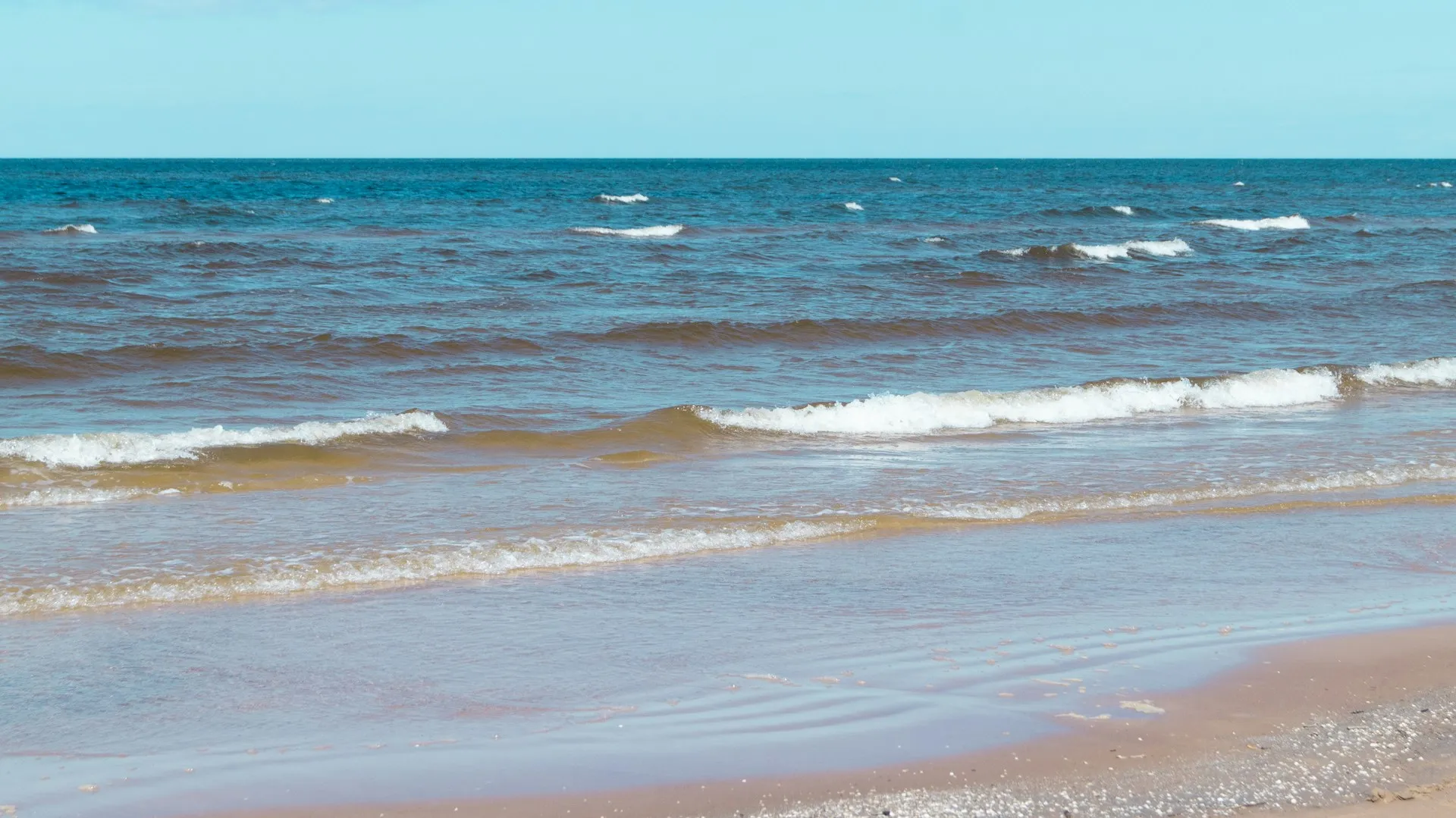
The beach is the reason people come to Jurmala, and it delivers. The sand is fine and pale, the water is clean, and the shoreline runs straight for 33 kilometres without interruption. The beach is wide enough that it does not feel crowded, even in July, and the dunes behind it are protected, so no buildings sit directly on the sand.
The water in the Gulf of Riga is shallower and warmer than the open Baltic. In July and August, the temperature reaches 20 to 22 degrees Celsius, warm enough for extended swimming. The sea floor drops gently, so wading out is gradual. The beach has no dangerous currents, though the wind can pick up in the afternoon.
There is no entrance fee. The beach is public along its entire length. Rented sun loungers and umbrellas appear near Majori and Dzintari in summer, but most visitors spread towels on the sand. Showers and toilets sit at intervals along the boardwalk. The beach is cleanest in the mornings, before the afternoon crowds arrive.
A wooden boardwalk runs along the beach for most of Jurmala’s length, connecting Majori to Dzintari and beyond. The path is wide enough for two people to walk side by side, and it crosses the dunes at several points with ramps and steps. The boardwalk is well maintained and flat, suitable for walking, running, or cycling.
The walk from Majori to Dzintari along the boardwalk takes about fifteen minutes. Extending it to Bulduri adds another fifteen. The full length of the boardwalk covers about 20 kilometres, but the central section between Majori and Pumpuri is the most interesting.
Jomas Street
Jomas Street is Jurmala’s main pedestrian road and its social centre. The street runs for 1.6 kilometres from the Majori train station area toward the beach, lined with cafes, restaurants, ice cream shops, and souvenir stalls. The pace is slow: people walk, stop for coffee, and walk again. In summer, the street fills with families and couples in the late afternoon.
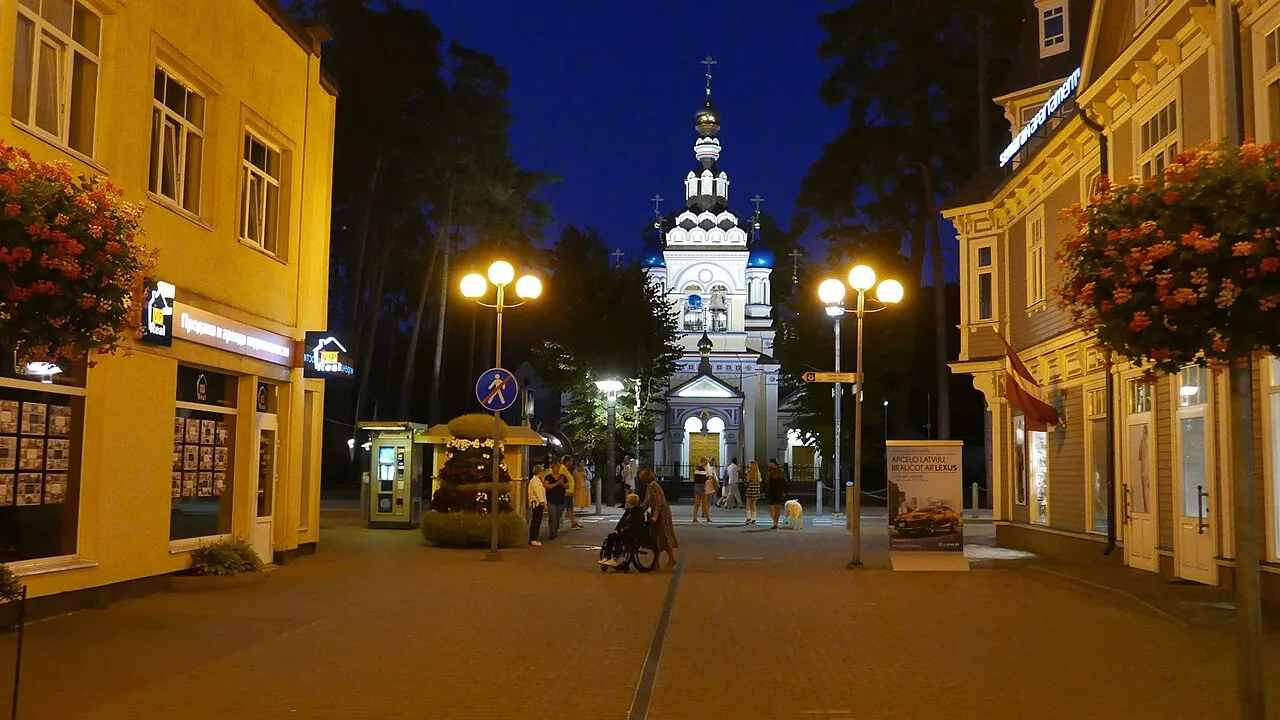
The northern end, near the station, has the most commercial activity: fast food, souvenir shops, and gelato stands. Moving south, the street gets quieter and the restaurants more local. The central section, between the Majori intersection and the Dzintari park entrance, has the best mix of cafes and bakeries. Look for Lido, which serves Latvian comfort food in a self-service format, and the bakeries selling dark rye bread and seasonal pastries.
A lunch on Jomas runs eight to fifteen euros. A coffee is two to three euros, and an ice cream cone costs two. The street is pedestrian-only, so there is no traffic noise. The wooden houses on either side give the street a scale that feels human rather than commercial.
Wooden architecture
Jurmala’s wooden houses are its most distinctive feature after the beach. The town grew as a summer resort in the late 19th and early 20th centuries, and the wealthy visitors built ornate wooden villas in the Jugendstil style. The houses combine carved gables, verandas, and floral woodwork in a way that has no equivalent elsewhere in the Baltics.
The best concentration of wooden villas sits along the side streets off Jomas, between Majori and Dzintari. Streets like Lielā prospekts and Meža prospekts have long rows of well-preserved examples. Some have been restored to their original colours, while others show the faded paint of decades. The houses are private homes, so admire them from the street.
A good walking route covers about 45 minutes: start at Majori station, head north on Lielā prospekts, turn down the side streets toward the beach, then loop back along Meža prospekts. The architecture is easiest to appreciate in the late afternoon, when the low light brings out the carved details and the warm wood tones.
Dzintari concert hall and park
Dzintari sits just south of Majori and is home to Jurmala’s most famous cultural venue. The concert hall opened in 1936 and became a symbol of Latvian music during the Soviet years, hosting jazz festivals and classical concerts. The building has been renovated and still draws international performers in summer.
The concert hall sits in a forested park that was designed as a public garden in the 19th century. The park has walking paths, benches, and a pond, and the trees are tall enough to block out the town. In summer, the open-air stage hosts concerts that are worth checking ahead of a visit, since tickets sell quickly.
The surrounding pine forest is part of the reason Dzintari feels different from the built-up core near Majori. The park connects to the beach boardwalk, so it is easy to combine a concert or a park walk with swimming. The forest floor is sandy and open, with clear paths that make navigation simple.
The pier and lighthouse
Jurmala has several wooden piers that reach out into the Gulf, built over the decades for boat moorings and beach access. The most photogenic is the one at Majori, which extends far enough to give a clear view of the coastline in both directions.
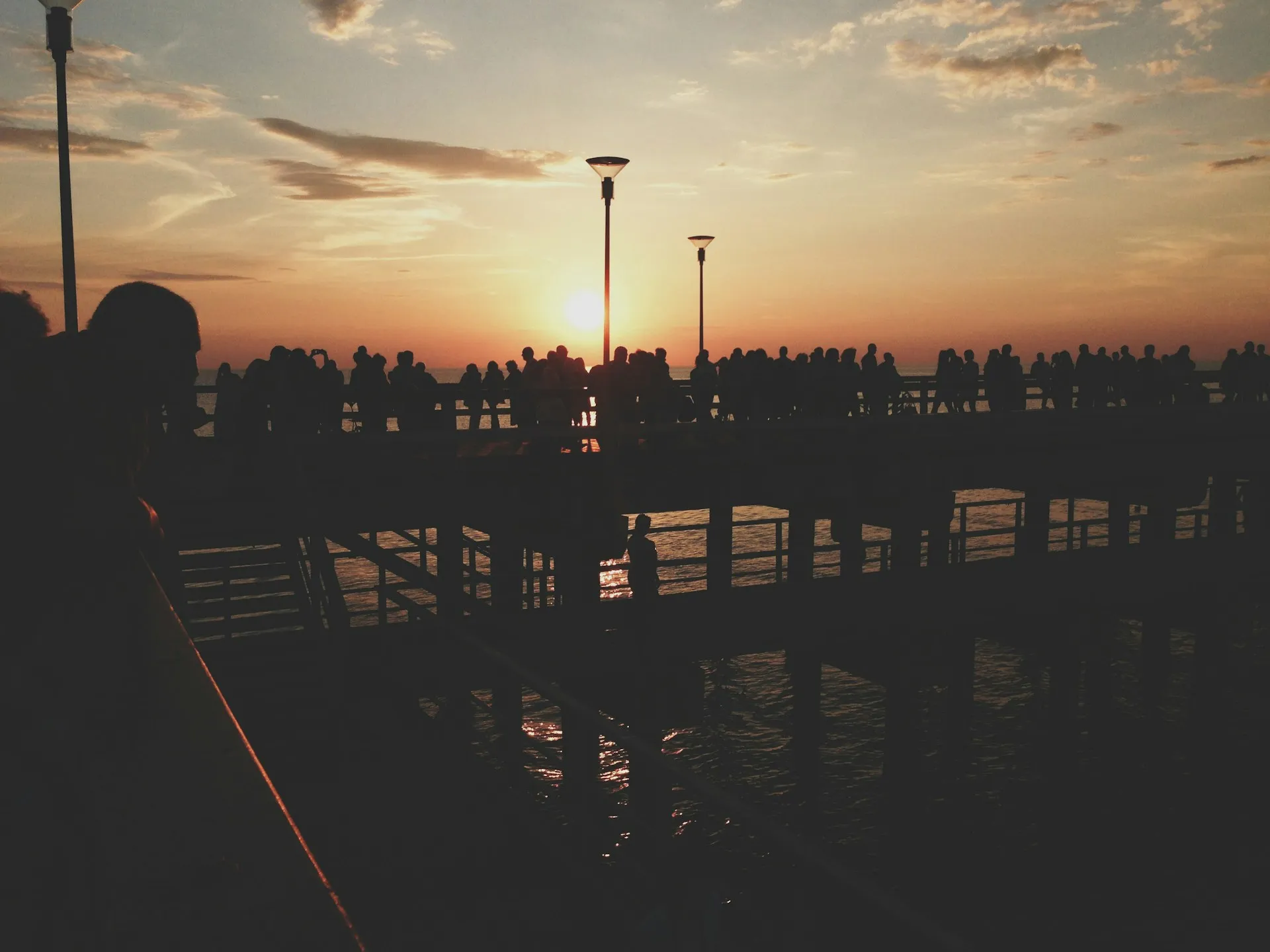
The Majori pier is free to walk and takes a few minutes each way. The boards creak underfoot, and the view from the end is the best in the town: the beach sweeps away north toward Bulduri and south toward Dzintari, with the pine forest behind the dunes. The pier makes a good spot for sunset, when the light falls across the water.
There is no lighthouse open to visitors, but the small signal light at the end of the pier serves the same purpose visually. The pier can be busy on warm summer evenings with couples and photographers. Arrive early morning or just before sunset for a quieter visit.
Eating and drinking
Jurmala’s food scene splits between the tourist-facing restaurants on Jomas and the more local spots in the residential streets. In summer everything is busy, but the quality varies more than the prices suggest.
Lido, near the Majori end of Jomas, serves Latvian comfort food in a self-service format: potato pancakes, beet soup, meat pies, and sauerkraut. A full plate with a drink runs eight to twelve euros. Lido is reliable and quick, a good option for families and budget travelers.
For local seafood, the restaurants near the beach grill fresh fish in summer, including sprats and Baltic herring. Smoked eel is a regional speciality and worth trying at any of the dedicated stands. Dessert means ice cream, which is a serious business in Jurmala; the gelaterias on Jomas close by 22:00 even in July.
Practical info
2 readingsGetting there and around
The train is the easiest way to reach Jurmala. Trains from Riga Central Station run every fifteen to thirty minutes along the coast, stopping at each neighbourhood. Get off at Majori, the main stop, unless you are heading to Dzintari or Bulduri. The ride takes twenty-five minutes and costs 1.40 euros. Buy a ticket from the machine or the kiosk before boarding.
Once in Jurmala, everything you need sits within walking distance of the station. The beach, Jomas Street, and the boardwalk are all reachable on foot. A local bus runs along the coast road if you want to reach the farther neighbourhoods, but most visitors never need it. Bring a hat and sunscreen in summer, since the beach has little shade and the sun reflects off the sand.
Practical notes
The euro is the currency. Most places accept cards, but carry some cash for market stalls and smaller cafes. Swimming is allowed on the main beaches, and lifeguards operate in July and August near Majori and Dzintari. The water is clean and tested regularly. In the offseason, from October to May, Jurmala is much quieter, and some restaurants close for winter, but the beach walks and the wooden architecture remain reasons to visit.
This post contains affiliate links. Booking through them earns a small commission at no extra cost to you, and helps keep the site running. Thank you if you do.
Frequently asked questions
Is Jurmala worth a day trip from Riga?
Yes. Trains from Riga Central Station to Majori run every fifteen to thirty minutes and take about twenty-five minutes. The beach, Jomas Street, and the boardwalk all sit within walking distance of the station, so a long day is enough.
How long is Jurmala's beach?
Jurmala's beach runs for 33 kilometres along the Gulf of Riga, making it the longest continuous beach in the Baltics. The sand is fine and pale, the water shallow, and the shoreline public along its entire length.
When is the best time to visit Jurmala?
June through August for swimming, when the water reaches 20 to 22 degrees Celsius. September is quieter with mild weather and warmer-coloured water. October to May is the offseason, with empty walks and some restaurants closed for winter.