Lithuania is the southernmost of the three Baltic states and the one that stays with you longest after you leave. It has the largest old town in Northern Europe, an island castle that looks lifted out of a storybook, a hill covered with hundreds of thousands of crosses, and a narrow sand peninsula that was declared a UNESCO site while still split between two countries. Almost none of it is crowded. Almost all of it is cheap.
What follows is a ranked list of the fifteen best things to do, spread across the whole country, built on Lithuania’s own highlights but detailed enough to plan a full trip around. Each entry carries a note on practical logistics, and the whole list also sits neatly inside the broader Grand Baltic Loop if you are driving through all three states. The ranking draws on UNESCO inscription records, official site information and the national Lithuania Travel portal, cross-checked while writing for current opening status.
Four or five days covers the essentials, seven to ten days does the whole list at a sensible pace. You will need a car to reach the far west and the lake country, while everything around Vilnius works well on the train.
- 01Vilnius Old Town
- 02Trakai Island Castle
- 03The Hill of Crosses
- 04Curonian Spit and the Parnidis dune
- 05Kaunas Old Town and Art Deco
- 06Palanga Pier and the Amber Museum
- 07Užupis
- 08Kernavė
- 09The Hill of Witches
- 10Aukštaitija National Park
- 11Pažaislis Monastery
- 12The Ninth Fort
- 13Druskininkai
- 14Museum of Occupations and Freedom Fights
- 15Klaipėda and the ferry to the Spit
- 16Practical info
Capital
Vilnius, with the largest surviving old town in Northern Europe.
Getting around
A car covers the whole country comfortably. Vilnius to Kaunas works by train, and a ferry links Klaipėda to the Curonian Spit.
Best time
May to late June for long days and green countryside. September for quieter roads and cheaper rooms.
Duration
Four to five days for Vilnius, Trakai, the Hill of Crosses and the coast. Seven to ten days to see all fifteen.
- Base the trip in Vilnius: the old town, Trakai, Užupis and the occupations museum all sit within a day of it.
- Run the Hill of Crosses, Kernavė and Kaunas as a loop north and west of the capital, with the Ninth Fort and Pažaislis on the way.
- Give the coast its own leg: Palanga, Klaipėda and a full day on the Curonian Spit, starting with the morning ferry.
- Add Aukštaitija in the lake country when the car is already out, or Druskininkai for a slow end to the trip.
- Budget around 90 to 110 euros a day mid-range, and pick May, late June or September over July for the beaches.
Vilnius Old Town
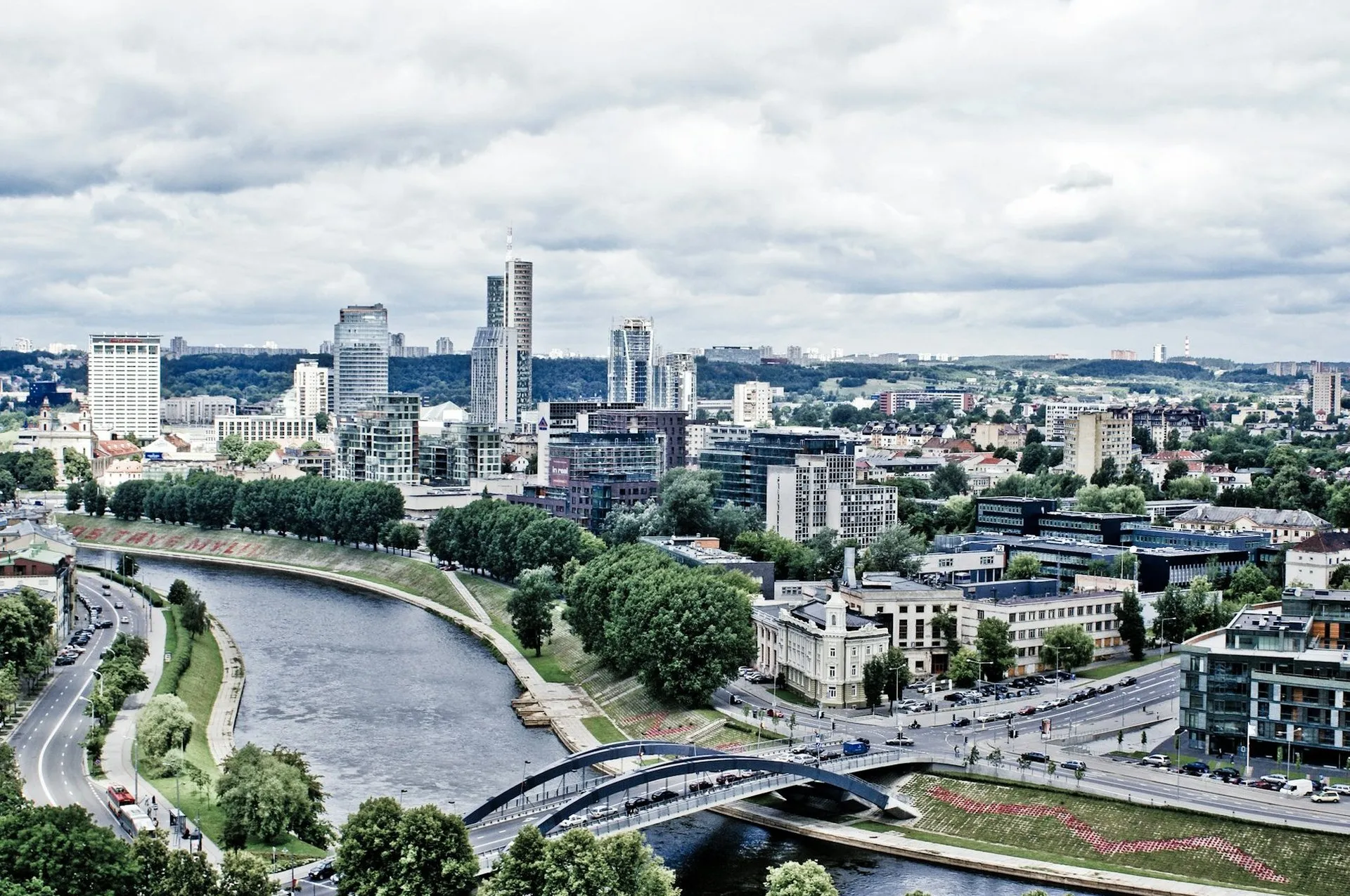
Start where everyone starts, because the old town is the reason most people come. Vilnius holds one of the largest surviving medieval centres in Northern Europe, roughly three and a half square kilometres of cobbled streets, hidden courtyards, and a baroque skyline that turns honey-coloured in the evening light. It was inscribed by UNESCO in 1994, and it is walkable in a long day or two relaxed ones.
Begin at Cathedral Square and climb Gediminas Hill for the panorama that explains the whole city at once. Then drift from church to church, from the white neoclassical cathedral to the brick confection of St Anne’s. Allow a day at minimum, and resist the urge to tick the old town off too fast.
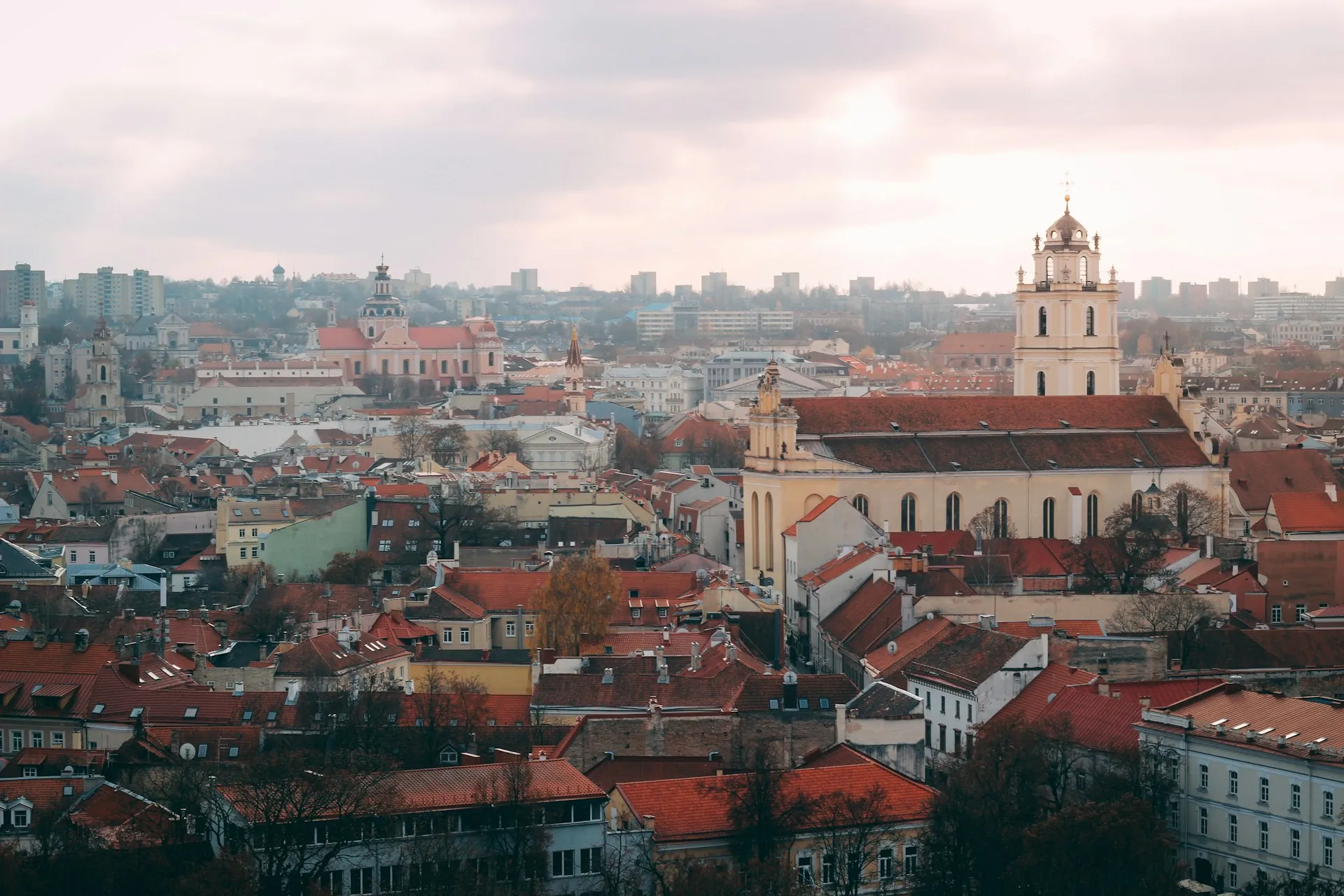
Vilnius deserves more than a transit stop. A full day here folds easily into the wider three-day route in our Vilnius itinerary.
Trakai Island Castle
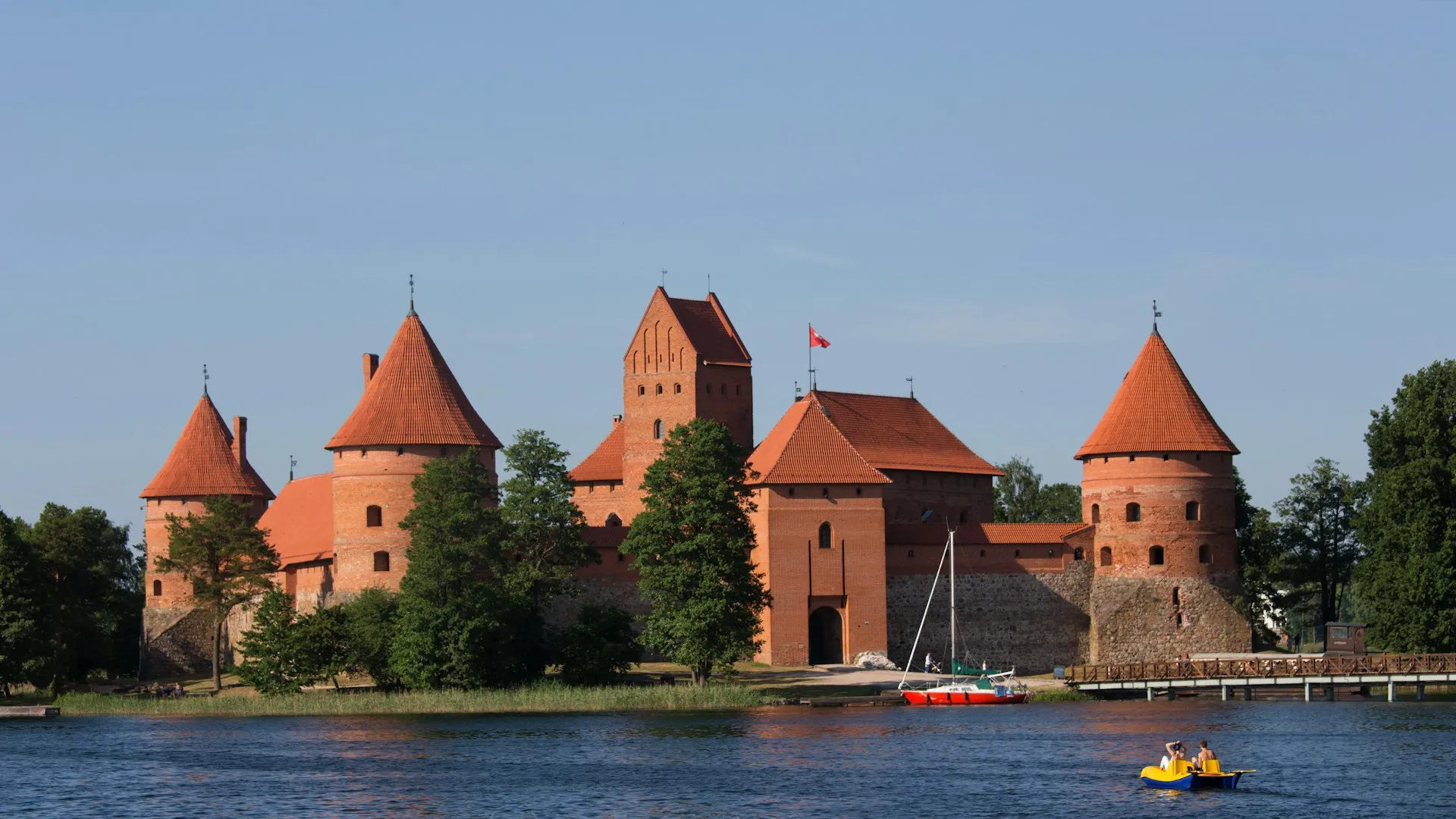
About half an hour west of Vilnius, a fourteenth-century castle rises out of Lake Galvė. Red brick towers, wooden bridges, and a picture-postcard reflection in the water make it the single most photographed place in the country, and unlike many postcard castles it is genuinely easy to reach.
You cross to the island on a boardwalk and wooden bridges, tour the reconstructed halls, and then do what most crowds miss: eat in the town. Trakai belongs to the Karaim, a Turkic-speaking community brought here centuries ago, and their baked pastries, kibinai, remain the best reason to linger after the castle empties.
Take the train or bus from Vilnius, about thirty minutes each way, and budget a half day so the castle, the lake walk, and lunch in the old town all fit.
The Hill of Crosses
An hour north of Vilnius, near Šiauliai, a low hill has been filling up with crosses for generations. No one has counted them all; official estimates passed one hundred thousand in 2006, and pilgrims keep adding more. Some crosses are carved oak, some are welded scrap, and all of them carry a name, a prayer, or a thank-you.
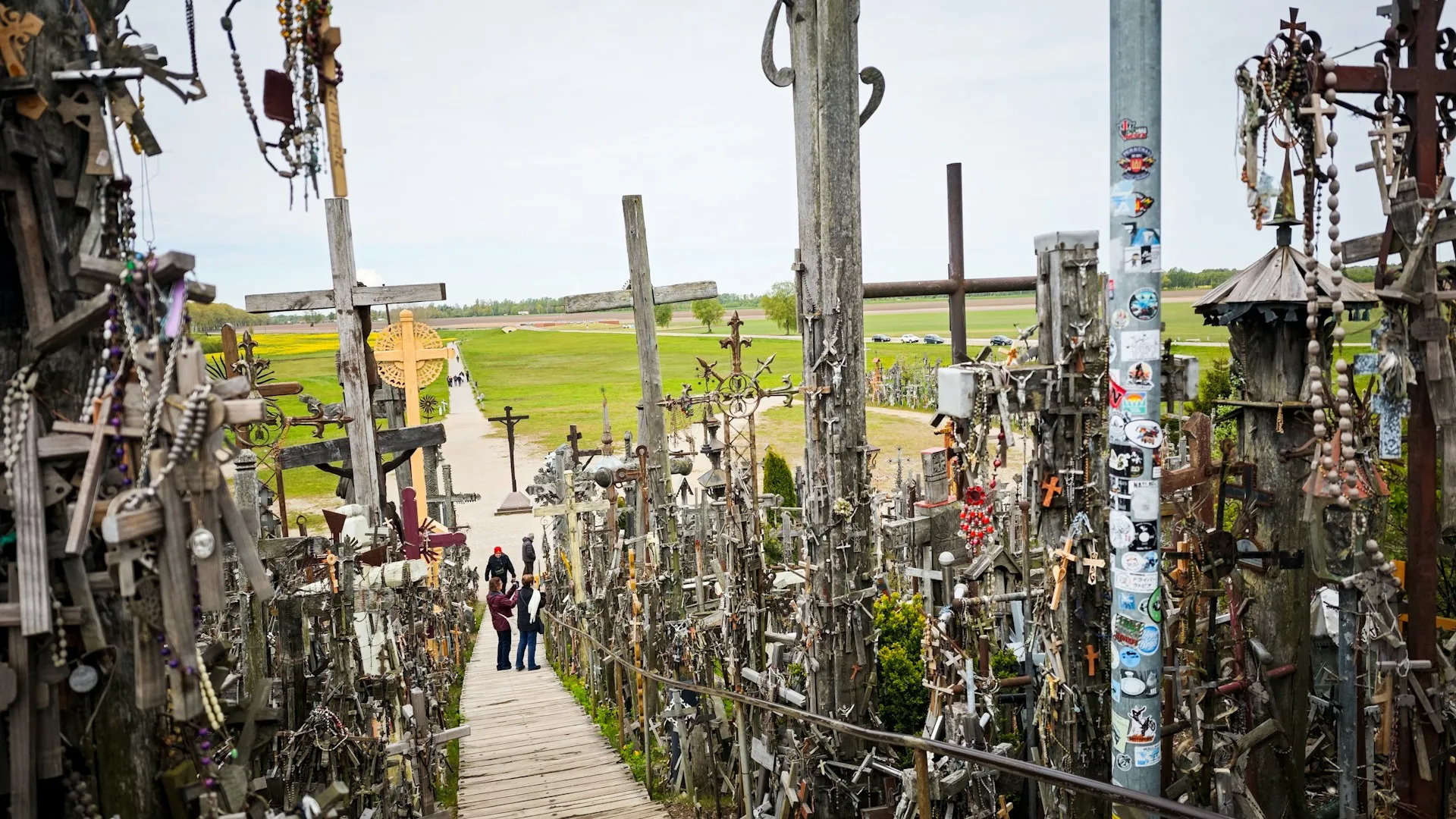
The site has been torn down repeatedly, most brutally under Soviet rule, and each time it came back. That quiet persistence is the whole story of the hill, a place that is sober rather than cheerful and unforgettable rather than pretty. It sits on the Way of Joy pilgrimage route through the region, about twelve kilometres from Šiauliai, and the drive from Vilnius takes under two hours.
Allow an hour on the hill itself, longer if you walk the paths among the crosses or stop at the small pilgrim facilities below.
Curonian Spit and the Parnidis dune
A 98 kilometre ribbon of sand divides the Curonian Lagoon from the Baltic Sea. The spit narrows to a few hundred metres in places and still carries villages, forests and a road along its entire length. It was listed by UNESCO in 2000, shared between Lithuania and the Russian exclave of Kaliningrad across the border checkpoints.
The highlight is Nida and its shifting grey dune, the Parnidis dune, which rises about 52 metres and keeps burying the forest on its lee side. Climb the boardwalk for a view that runs across the dune sea to the lagoon, then walk the fishermen’s huts and wooden church back in town. Nida is picture-book quiet, almost all of it protected green.
A ferry from Klaipėda reaches Smiltynė at the spit’s northern end, where you pick up the bus or a bike. Budget a full day for Nida and the dunes, and two if you want to stop at Juodkrantė on the way down.
Kaunas Old Town and Art Deco
Lithuania’s second city keeps surprising people. It has a compact old town around a cobbled square that empties into parkland, an interwar Art Deco district that survived the century almost intact, and a modernist city centre that UNESCO added to its list in 2023. Kaunas was European Capital of Culture in 2022, and the renovation that came with it shows.
The Devil’s Museum is the classic stop, a single collector’s obsession with the devil rendered in thousands of small objects from around the world. The old town’s cafés and the riverside walk along the Nemunas fill the rest of a day comfortably.
Kaunas is about an hour and a half from Vilnius by a frequent and cheap train, easy as a day trip and even better as an overnight.
Palanga Pier and the Amber Museum
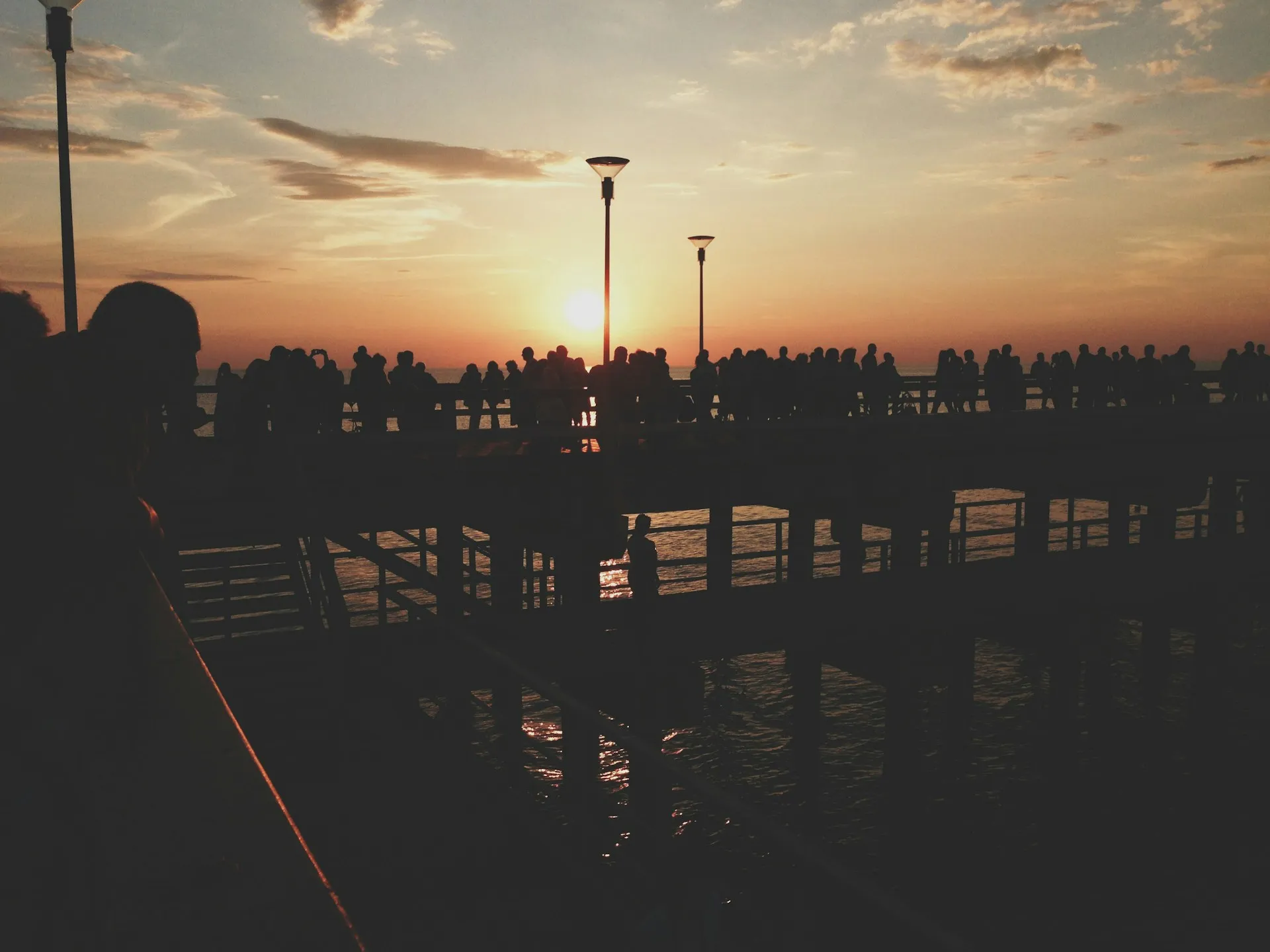
Lithuania’s busiest seaside town is a low-key summer resort built around two things: a long wooden pier and a palace full of amber. The pier runs 470 metres out over the Baltic in an L shape with a small pavilion at the end, and the walk out and back is the classic Palanga evening.
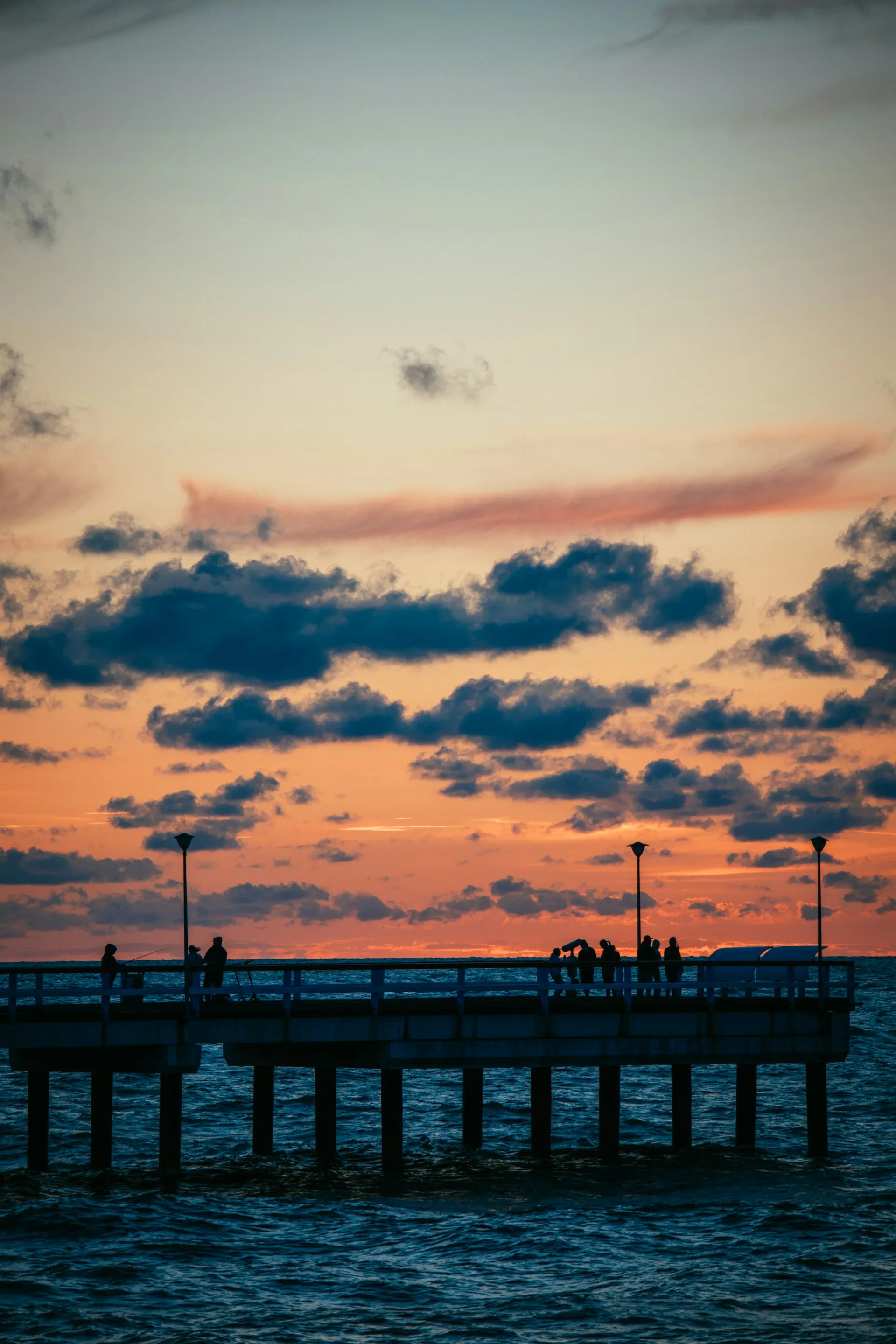
A few streets behind the beach, the Amber Museum in the Tiskeviciai Palace holds around 28,000 pieces, including insects and leaves trapped for millions of years. Both stops work in a day, with the beach in the middle. For the full picture, including the dune-backed beaches and the sandier stretches north of town, see our Palanga guide.
Užupis
Across the Vilnelė from the old town, a neighbourhood declared itself a republic on April Fools’ Day 1997, complete with a president, an anthem, and a constitution mounted on a wall. The constitution includes the right to be happy and the right to be unhappy, and it is enforced by no one at all.
Part art project, part working artists’ quarter, Užupis is where Vilnius goes for coffee, cheap food, and an unpolished evening energy. It is the city’s smallest district, barely half a square kilometre, so it is easy to walk from end to end between the Angel of Užupis statue and the bridge.
Two hours on foot covers the constitution wall and the main lanes, and the late afternoon is when the cafés start to fill.
Kernavė
The traditional first capital of the medieval Lithuanian state sits on a bend of the Neris, an hour from Vilnius. Five steep hillforts rise out of the river valley where the early dukes built their strongholds, and the site was inscribed by UNESCO in 2004 as one of the key archaeological reserves of the Baltic.
A walking trail loops over the hillforts, past reconstruction sites where the settlement is pieced back together, down to the riverside below. The museum explains what was found here, from sixth-century crafts to traces of the town that the Teutonic Order erased in the late fourteenth century.
Budget two to three hours. There is parking and a small entry fee, and the site is rarely busy outside weekend mornings.
The Hill of Witches
Halfway down the Curonian Spit, the forest above Juodkrantė hides an open-air art gallery with a twist. More than 80 carved wooden figures line a winding trail, characters pulled straight out of Lithuanian folklore: witches, devils, dragons, and villagers caught mid-story. The first figures were carved in wooden-sculpture camps in 1979 and 1981, and the collection has been growing since.
The trail is roughly a couple of kilometres and gains a little height as it goes, which earns you views back over the lagoon. It is free, family-friendly, and the most genuinely strange stop on the spit.
Combine it with the eagle observation tower nearby on a single Juodkrantė stop, and allow an hour and a half away from the car.
Aukštaitija National Park
Lithuania’s oldest national park, established in 1974, is a lake country in the northeast of the country. More than 120 lakes sit between low forested ridges, linked by streams and quiet boat routes, with wooden villages scattered along the shores that look much as they did a century ago.
The best way in is by kayak or a rented boat from places like Palūšė, gliding between lakes and portages the way people have travelled here for generations. On land, the little log church in Palūšė and the beekeeping tradition in the park villages are worth a detour.
Come with a car and a full day. The park is about a two and a half hour drive from Vilnius, and the open-air water routes are its main attraction, so the season runs from May to September.
Pažaislis Monastery
On a peninsula in the waters east of Kaunas, the Pažaislis Monastery is the grandest baroque ensemble in Lithuania. It was begun in the 1660s for the Camaldolese order, whose monks lived in separate hermit cells, and the surviving church, frescoes and bell towers survive with far more of the original decoration than most Baltic monuments.
The interiors are the reason to come: gilded altars, ceiling frescoes, and the largest dome of its kind in the country. It reads less as a museum and more as a place where the old monastic rhythm is still faintly visible in the layout.
About fifteen minutes from Kaunas by car, it pairs naturally with the old town in a single day out.
The Ninth Fort
Above Kaunas, a ring fortress from the late nineteenth century holds the heaviest history in the country. The Ninth Fort became a prison, then a staging ground for the mass executions of the Second World War, and then a Soviet-era memorial site. A brutalist monument more than 30 metres tall stands over the killing ground, and the museum inside tells the story without softening any of it.
It is emotionally demanding in a way few tourist sights are, and it matters. The exhibits cover the fort’s use under the Tsarist empire, the occupation, and the prisoners who dug tunnels trying to escape. Allow a respectful two hours, and pair it with the lighter half of Kaunas afterwards.
The fort sits a short bus or taxi ride north of Kaunas city centre, on the road that heads out toward Vilnius.
Druskininkai
The country’s classic wellness town grew up in the nineteenth century around its mineral springs, and it still runs on that old spa rhythm. A wide park follows the Nemunas, sanatoriums line the green lanes, and the drinking halls where people take the local water sit in the middle of it all. It is the place to do very little with clear conscience.
The modern additions are just as inviting: the Snow Arena for indoor winter sports year-round, and a cable car across the Nemunas that takes you up to a hilltop restaurant with a view over town. The famous Čiurlionis house museum is closed for reconstruction until 2027, so check before planning around it.
Druskininkai is about two hours south of Vilnius, close to the Belarusian border, and works best as a slow overnight rather than a rushed day trip.
Museum of Occupations and Freedom Fights
In the heart of Vilnius, the former KGB headquarters has been turned into a museum of what occupation actually did. Cellars with damp walls, interrogation rooms, and the executions corridor are preserved as they were found, and the floors above hold exhibitions on the deportations and the resistance that followed.
It is the hardest thing on this list and easily the most important for understanding how the Baltics got from the twentieth century to a European Union member state. Go early, go sober, and give it two hours.
The museum sits at Aukų Street 2A, a short walk north of the old town, and the entrance fee is modest.
Klaipėda and the ferry to the Spit
The port city on the Curonian Lagoon is older than Vilnius, founded in 1252, and it spent centuries turning from a German garrison town into the Lithuanian window on the sea. Its old town keeps a distinctly un-Lithuanian flavour, with timber-framed streets and a square that still faces toward the water trade that built it.
Practically, Klaipėda is the gateway to the Curonian Spit: a regular passenger ferry crosses from the city port to Smiltynė on the spit in under ten minutes, and the buses and bike path run from there to Nida. The city itself is a pleasant half day of waterfront cafés, the doll museum, and the old town lanes, and it makes the natural overnight before heading onto the spit.
From Vilnius the bus takes about four hours, and from the Latvian coast the drive runs down past Palanga in under two.
Practical info
6 readingsGetting there
Vilnius (VNO) and Kaunas (KUN) airports both see European connections, with Kaunas heavily used by budget carriers. Overland, comfortable buses link the Baltic capitals, and the country sits at the southern end of the Grand Baltic Loop for anyone driving from Riga or Tallinn.
Getting around
A car is the honest answer for the full list, since Aukštaitija and the western towns need wheels. The Vilnius to Kaunas train is frequent, cheap and fast, and the ferry from Klaipėda to the Curonian Spit is a fixture. Buses and taxis more or less everywhere are inexpensive.
Budget
Traveller-reported mid-range costs land around 90 to 110 euros a day per person, all in, with accommodation the biggest line item. Entry fees are small almost everywhere, and the dunes, most of the old towns, and the Hill of Crosses are free.
When to visit
May to late June brings long days and green countryside. September is quieter and cheaper with workable weather. July is the busiest month and the beaches fill up, so either embrace the summer seasons or go around the edges of them.
Duration
Four or five days covers Vilnius, Trakai, the Hill of Crosses and a day at the coast. Seven to ten days lets you add the Curonian Spit, Kaunas and one national park. The full 15 in easy order works as the Lithuanian leg of a longer Baltic road trip.
What to eat
Cepelinai, the potato dumplings stuffed with meat or curd, are the national dish and worth hunting out. Šaltibarščiai, the cold beet soup, appears everywhere in summer, dark rye bread and gira with it. Trakai’s kibinai are a mandatory stop, and the craft beer scene has grown fast this decade.
This post contains affiliate links. Booking through them earns a small commission at no extra cost to you, and helps keep the site running. Thank you if you do.
Frequently asked questions
How many days do I need in Lithuania?
Four or five days covers the essentials: Vilnius, Trakai, the Hill of Crosses, and Palanga. Give it seven to ten days and you can add the Curonian Spit, Kaunas, and one of the national parks without rushing.
What is the best time to visit Lithuania?
May through late June has the longest days and the greenest countryside. September is quieter and a little cheaper, with weather that still suits walking. July is the busiest month, especially around the coast.
How do I get to the Curonian Spit?
A regular passenger ferry crosses from the Klaipėda ferry terminal to Smiltynė on the northern tip of the spit, then buses and a cycle path run south to Nida. From Vilnius, the bus to Klaipėda takes about four hours.