Nearly 3.5 million passengers flew through Tallinn Airport in 2025, a record year (Tallinn Airport). The walled Old Town has been on the UNESCO World Heritage list since 1997, and in 2024 Tallinn took 69% of Estonia’s foreign overnight stays (Visit Tallinn).
The city counts a little over 452,000 residents (Statistics Estonia). The tourist core is tiny: the walled Old Town and the Toompea hill above it sit on a peninsula wedged between the harbour and the bay. Everything else worth seeing, from the wooden houses of Kalamaja to Kadriorg’s palace park, is a short tram ride away.
That compactness is the whole trick. Most visitors never need a car. The airport is five kilometres from the Old Town, the ferry terminal sits at the end of the same street, and Helsinki is close enough for a day trip across the sound. The Tallinn to Helsinki route alone carried 7.2 million passengers in 2024 (Port of Tallinn).
Tallinn costs more than Riga and Vilnius and less than Helsinki, the bracket it competes in. Foreign visitors spent about €245 per trip in 2024 on average, across accommodation, food, and activities (Visit Tallinn). Eat where locals eat and skip the souvenir shelves and the centre is far from expensive.
Getting there
Tallinn Airport (TLL) set a record with 3.49 million passengers in 2025 and sits about 20 minutes from the centre by tram. Ferries run from Helsinki (about 2 hours) and Stockholm (overnight). Buses link Tallinn to Riga and Vilnius.
Budget
Estonia costs more than the southern Baltic states and less than the Nordics. July and August push hotel prices up. May, June, and September are the best value.
Best time
June to August for white nights, festivals, and the beach. May and September are the sightseer sweet spot. Late November to December brings the Old Town Christmas market.
Duration
A long weekend covers the Old Town, Toompea, and Kalamaja. Three or four days let you add Kadriorg, the Seaplane Harbour, and a day trip to Lahemaa National Park.
Best time to visit
June through August brings the long days and the crowds. The sun drops below the horizon for only a few hours a night, the Old Town fills with festival stages and open-air concerts, and Pirita beach wakes up. July is the busiest month, when the evening ferries from Helsinki arrive stuffed with day-trippers and hotel prices hit their peak. Estonian summers rain more often than the brochures admit, so pack a light jacket whatever the forecast says.
May and September stay mild and quiet, with near-empty viewpoints and the best hotel rates. October to April is the trade-off. December compensates: the Christmas market fills Town Hall Square from late November, warm wine stalls line the cobbles, and a light snow on the gabled roofs is the version of Tallinn most postcards are sold on. The Old Town is atmospheric in winter even when the market is gone, if you dress for minus degrees.
Old Town
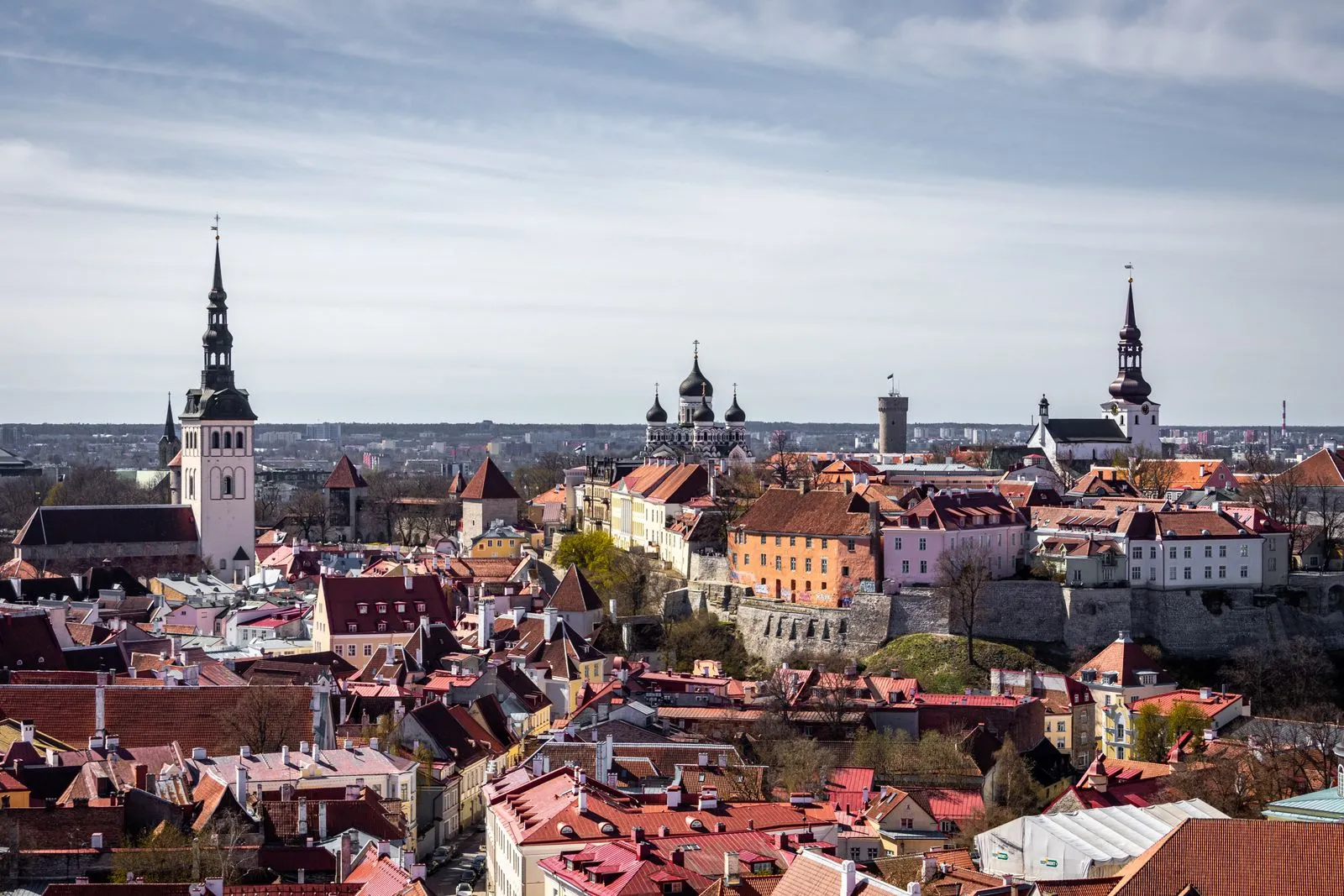
Tallinn grew up in the 13th century around the harbour where the Danes landed in 1219, joined the Hanseatic League a few decades later, and made its money as a grain and fish port on the route between Novgorod and the North Sea. The result is one of the best-preserved medieval city centres in Northern Europe: gabled merchants’ houses, a still-standing town wall, and a web of cobbled lanes that barely changed after the late Middle Ages.
The Old Town joined the UNESCO World Heritage list in 1997, and the property was later expanded to 113 hectares with a 2,253-hectare buffer zone. About 1.85 km of the medieval wall survives, complete with 26 defensive towers and two of its original gates (Visit Tallinn). You can climb several of them, and the squat fat towers still lean over the streets as they did when they were built to stop Livonian knights and Russian armies.
Start at Viru Gate, the pair of round towers that guard the eastern entrance, and walk the main drag to Town Hall Square. The Gothic Town Hall is from the 14th century, topped by the Old Thomas weather vane that appears on every souvenir. Duck into St Catherine’s Passage with its medieval guild workshops, then loop back past the churches. St Olaf’s Church, whose spire was among the tallest buildings in the medieval world, gives the best panorama for the least effort.
Where Tallinn's foreign visitors came from in 2025
Top 5 source markets, share of foreign visitors, mobile positioning (%)
Source: Visit Tallinn, 2025
- Finland41%
- Latvia9%
- Germany8%
- United States5%
- United Kingdom4%
Toompea
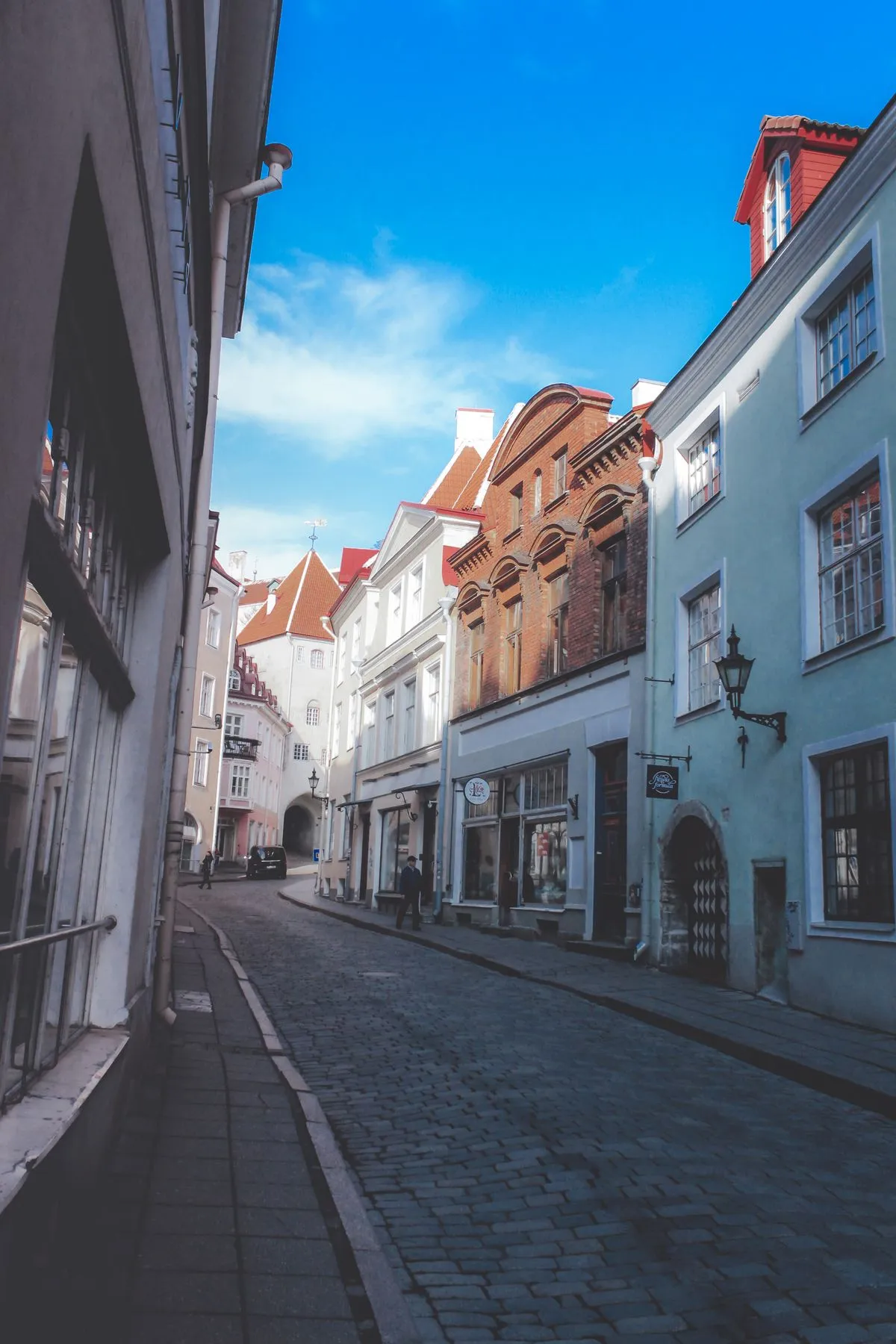
Toompea is the limestone hill that rises above the Old Town, the seat of power for centuries and still the parliamentary district today. Three streets connect it to the lower town, and the shortest climb is maybe ten minutes from Town Hall Square. At the top the views open across the red rooftops to the harbour and the Baltic beyond.
The onion domes of Alexander Nevsky Cathedral dominate the far end of the hill. The Estonian parliament, the Riigikogu, sits in Toompea Castle, fronted by the Pikk Hermann tower, and visitors can watch balcony sessions when parliament is sitting. The two named viewpoints, Kohtuotsa and Patkuli, crowd with people at sunset for good reason. Go early or late, look down over the wall, and the whole city reads like a map from up there.
Kalamaja and Telliskivi
Kalamaja, whose name means fish house in old Estonian, is the wooden-house district between the Old Town and the sea. Fishermen built the first pastel wooden homes here in the 19th century, and a walk along Soo and Vana-Kalamaja streets is the best preserved patch of that street life. The neighbourhood got a rail line in the 2000s that split it open, and the spaces under the tracks are now the city’s creative core.
Telliskivi Creative City is a complex of converted railway factories behind Balti Jaam station, packed with galleries, design shops, and some of the best lunch tables in town. Balti Jaam, the main station, hosts a large food hall and a weekend flea market, and the yard in front of it turns into a street-food strip on warm evenings. Kalamaja is where you come for the modern Tallinn: coffee, craft beer, vinyl, and eccentric shops that the Old Town lost years ago.
Kadriorg
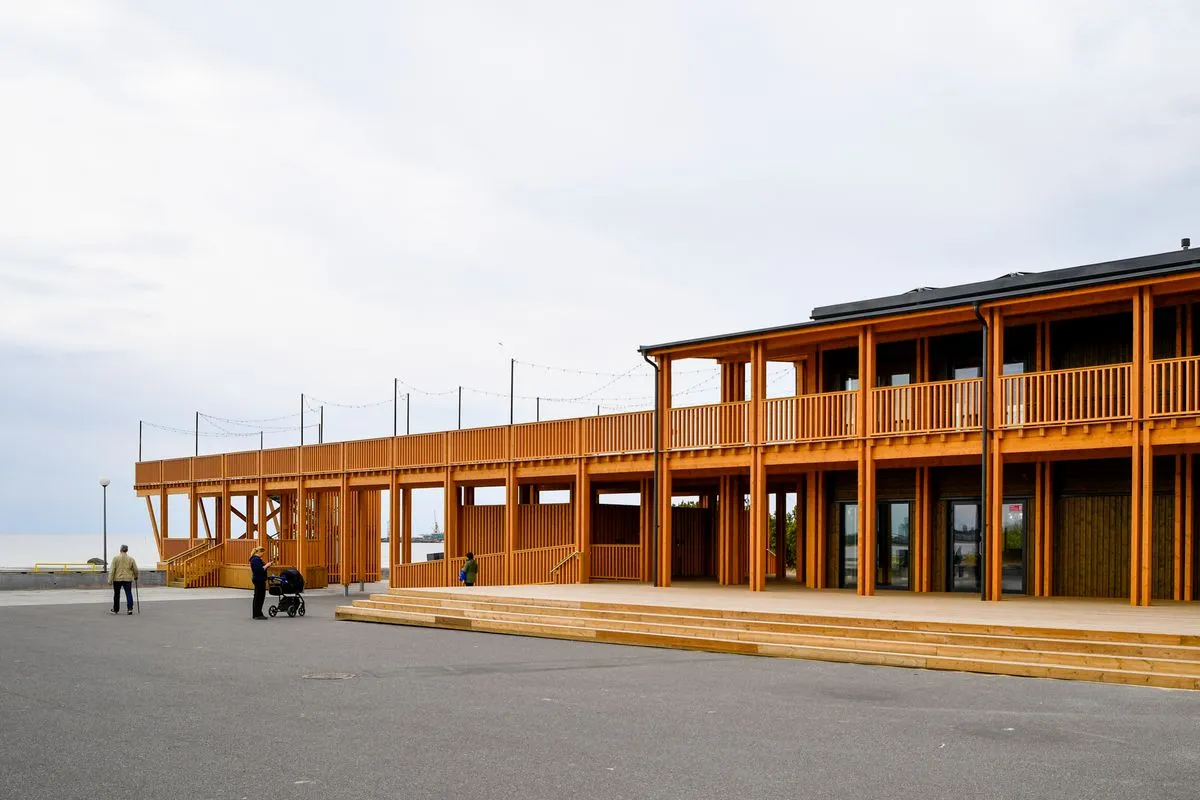
Kadriorg is the baroque park district a short tram ride east of the centre. The palace that gives the district its name was built in 1718 for Peter the Great, whose Russian court summered here, and it still stands at the head of a formal garden lined by linden trees. The palace houses a branch of the Estonian Art Museum, and the grounds are free to wander.
Beside the palace, KUMU is the main Estonian Art Museum, a modern building set into the park slope, and the place to see Estonian painting from the 19th century to today. The park also hides the ruined lighthouse and the president’s residence, and on a sunny afternoon the whole district works as a stroller’s version of the city: palaces, museums, and long lawns with the sea on one side.
Seaplane Harbour and the coast
The Seaplane Harbour, Lennusadam, opened in 1916 as a base for Russian navy seaplanes, and its wave-shaped concrete hangars are now the Estonian Maritime Museum. Inside you walk around a real submarine, the Lembit, and outside you can board the 1914 icebreaker Suur Tõll. It is the one museum in Tallinn where the building is as much of an attraction as the collection, and it works well with half a day attached.
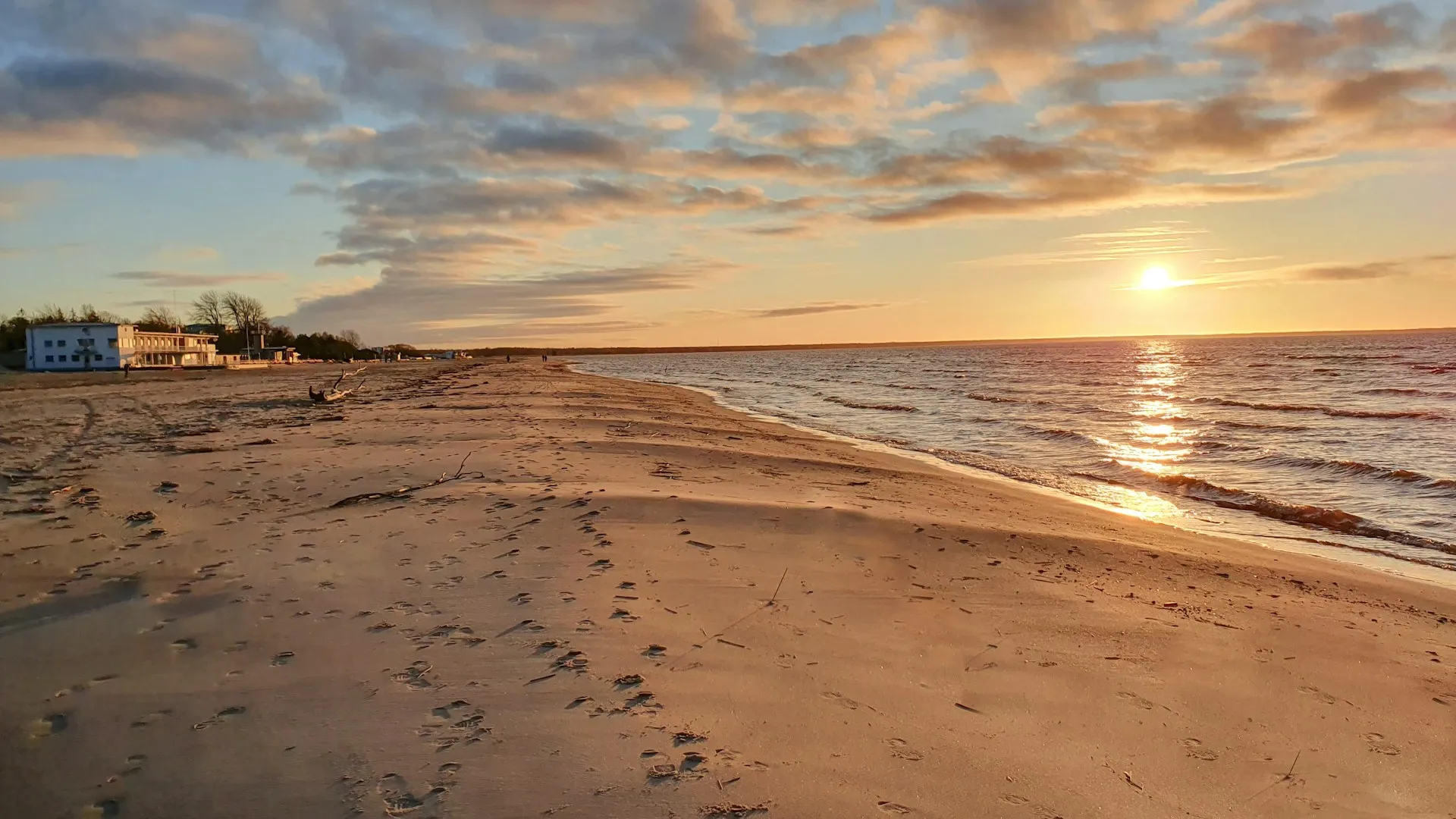
The coastline beyond the harbour is where Tallinn gets its beach town hat on. Pirita, six kilometres east of the centre, hosted the sailing regatta at the 1980 Olympics and still spreads pale sand along the mouth of the Pirita river. West of Kalamaja, Stroomi beach is the local’s pick and closer to the wooden-house district. The Baltic water is bracingly cold, and swimming works best from late June to August, when the long evenings make a beach sunset the easy finish to a city day.
Food and drink
Estonian food is bread and the sea. Order black rye bread with every meal, herring in mustard or vinegar, and mulgipuder, the mashed potato and barley mash served with fried pork and mushrooms. Smoked fish, salted cucumber, and pickled vegetables come around the table the way they have for centuries, and the Old Town now does a brisk business in reimagined versions of all of it.
Skip the restaurants with the laminated menus clipped to the doors. The food hall at Balti Jaam and the kitchens of Telliskivi and Kalamaja serve fresher food for less, and the courtyard seating there is where locals actually go. Estonia’s craft beer scene is one of the strongest in the Baltics, with breweries and taprooms dotted around Kalamaja, and good coffee is never more than a short walk away. Tipping is not expected, though rounding up or leaving about 10% in sit-down places is normal.
Getting around
The centre is walkable. The Old Town, Toompea, and the harbourside all fit in a day on foot, and the trams cover the rest: a network links the airport, Kalamaja, Kadriorg, and the centre. Tickets cost a little once you know how Tallinn does it. Residents ride free, a policy the city introduced in 2013, while visitors buy single rides or a day card from the city transport app or the machines at major stops.
You do not need a car, and parking in the Old Town is restricted to little more than nothing. Bolt covers the city for late nights and airport sprints. For the wider Baltics, the buses and trains run to Riga in about four to seven hours and on to Vilnius, and the Grand Baltic Loop itinerary strings all three capitals into one route.
How many days
Three days is the sweet spot. Day one takes the Old Town and Toompea. Day two is Kalamaja, Telliskivi, and the Balti Jaam food hall. Day three adds Kadriorg, KUMU, and the Seaplane Harbour, with Pirita beach as the flexible finish.
Four or five days give room to slack off and to run a day trip to Lahemaa National Park an hour east, with its bogs and manor houses. A full week stretches further to Saaremaa and the islands, and Helsinki is close enough to bolt onto either end of the trip. Tallinn also pairs naturally with Riga and Vilnius as one big loop, and the Old Town reads just as well on the first day as on the last.
Practical info
6 readingsCurrency and payments
Estonia uses the euro. Cards work across the city, including on most trams and in markets. Keep a little cash, around €20 to 50, for the food hall stalls and weekend flea market.
Language
Estonian is the official language. English is widely spoken across the city, and road and visitor signs carry English. A few words like “aitäh” for thank you open doors fast.
Visa
Estonia is in the Schengen Area. Most EU and EEA citizens, plus UK, US, Canadian, Australian, and Japanese passport holders, enter visa-free for up to 90 days in any 180-day period. Check current rules for your nationality before booking.
Getting around the city
The centre works on foot. Trams and buses cover the wider city and the airport, with tickets bought in the transport app or at stop machines. Bolt is on hand for late nights.
Weather
Summer averages sit at 15 to 22°C with long evenings, and winter hovers around minus six with shorter light. Pack layers in either direction, and a rain jacket in summer.
Safety
Tallinn is safe, including for solo travelers, and violent crime against visitors is rare. Take normal precautions at night and hold your phone tight in the crowded Old Town lanes.
This post contains affiliate links. Booking through them earns a small commission at no extra cost to you, and helps keep the site running. Thank you if you do.
Frequently asked questions
How many days do I need in Tallinn?
Three days is the sweet spot. Day one covers the Old Town and Toompea, day two Kalamaja, Telliskivi, and the Balti Jaam food hall, and day three adds Kadriorg, Kumu, and the Seaplane Harbour. A long weekend is enough for the centre; four or five days lets you add a day trip to Lahemaa National Park.
Is Tallinn walkable?
Yes. The Old Town, Toompea, and the harbourside all fit in a day on foot, and trams cover Kalamaja, Kadriorg, and the airport. You do not need a car inside the city. The airport sits 20 minutes from the centre by tram.
Do I need a visa to visit Estonia?
No, if you hold a passport from the EU, EEA, UK, US, Canada, Australia, or Japan. Estonia is in the Schengen Area, and most nationalities enter visa-free for up to 90 days in any 180-day period.