Lahemaa is Estonia’s largest national park, and it sits almost on the doorstep of the capital. The park’s southern edge starts roughly an hour east of Tallinn on the E20, the main road toward Narva, and its low coastal strip runs north to the Baltic. In the space of a single day you can walk a boardwalk over a bog, wander a restored Baltic German manor, and eat fresh smoked fish in a fishing village where the nets still hang by the water.
The name means “land of bays,” and the coast delivers on it, a chain of wooded peninsulas and quiet inlets. But the real appeal is the density of it. One road out of Tallinn holds old-growth forest, an edge of the largest peat bog in the region, and three centuries of manor history, all within a short drive.
You can see the park in one long day and be back in Tallinn by evening. A car opens up the spread-out stops, and without one you will lean on the hourly bus and a couple of hours of walking. Either way, the day rewards an early start, because the bog does its best in the morning light.
The park is mostly free to visit. The boardwalks and manor grounds cost nothing, and the small museum entries land in the single digits. For a full day outdoors with a tavern lunch, Lahemaa can end up cheaper than a comparable day inside Tallinn’s walls. It is the classic day trip from the capital, which gets three full days on our Grand Baltic Loop itinerary.
Getting there
About an hour east of Tallinn on the E20. Buses run the same corridor, but a car is the practical way to reach the spread-out stops.
Budget
The boardwalks, manor grounds, and villages are free. Museum interiors and a tavern lunch keep the day cheap, often cheaper than a day inside Tallinn.
Best time
Late spring and autumn for the richest bog colors and fewest people. Start early, because the bog does its best in morning light.
Duration
A single long day from Tallinn covers the bog, one or two manors, and a fishing-village lunch. Hikers can stretch it to two nights.
The Viru Bog
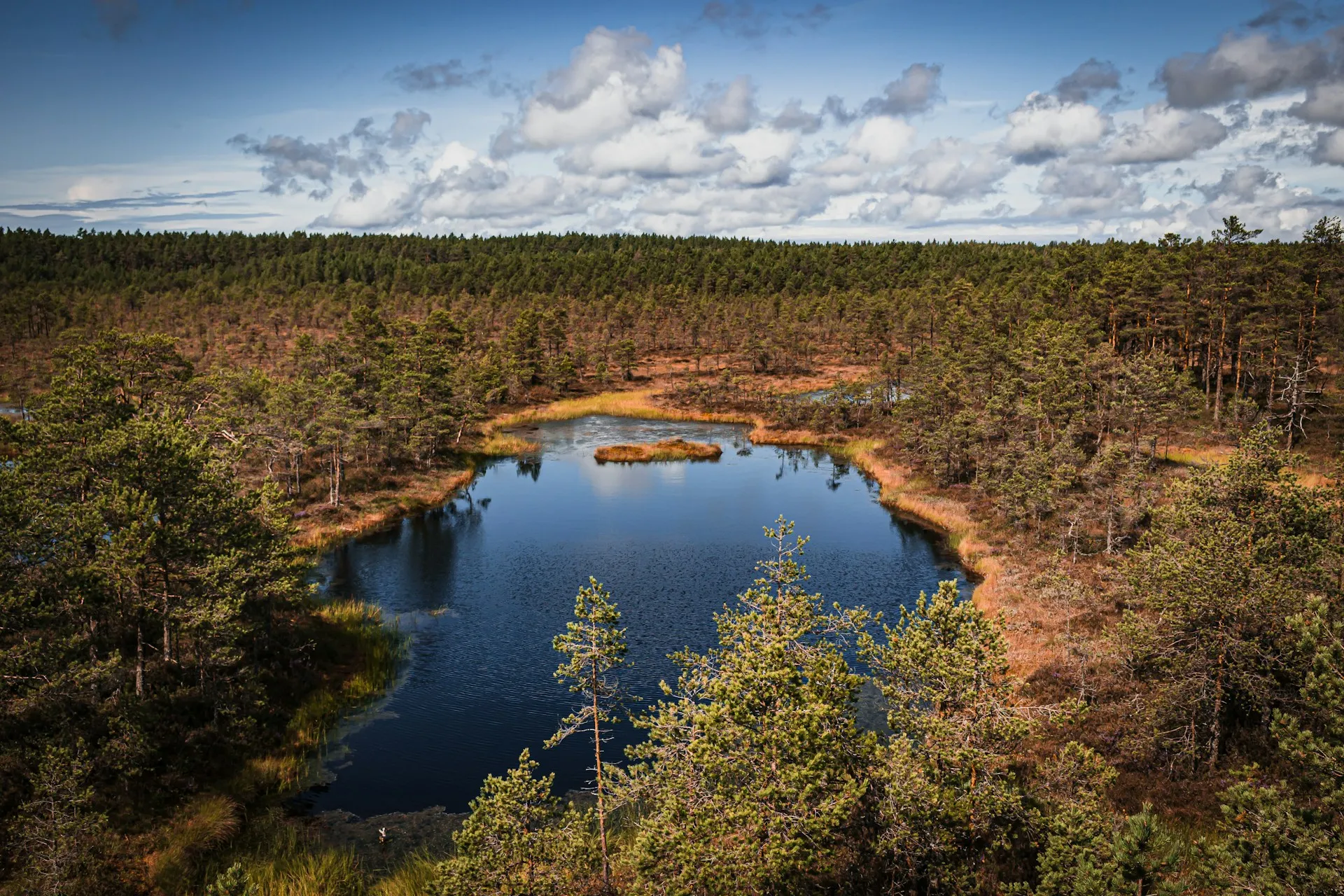
The Viru Bog is the most accessible of Estonia’s great mires, and the boardwalk route through it is the park’s signature walk. The trail runs in a six-kilometer loop and takes about three hours at a gentle pace. Wooden planks carry you over open bog where the water pools in a deep tea brown, stained by the peat that has been building here since the last ice age.
Partway around, an observation platform rises above the treeline. From it the bog opens out into a wide expanse of low moss, dwarf pines, and shallow pools, the kind of landscape that feels far older than the road you drove in on. Keep to the boards: the bog is wet underfoot and the trail is the safe line through it.
Free to walk, with a small parking area at the trailhead a short way off the main road. Go early to beat the tour groups and catch the light low over the water.
The manor houses
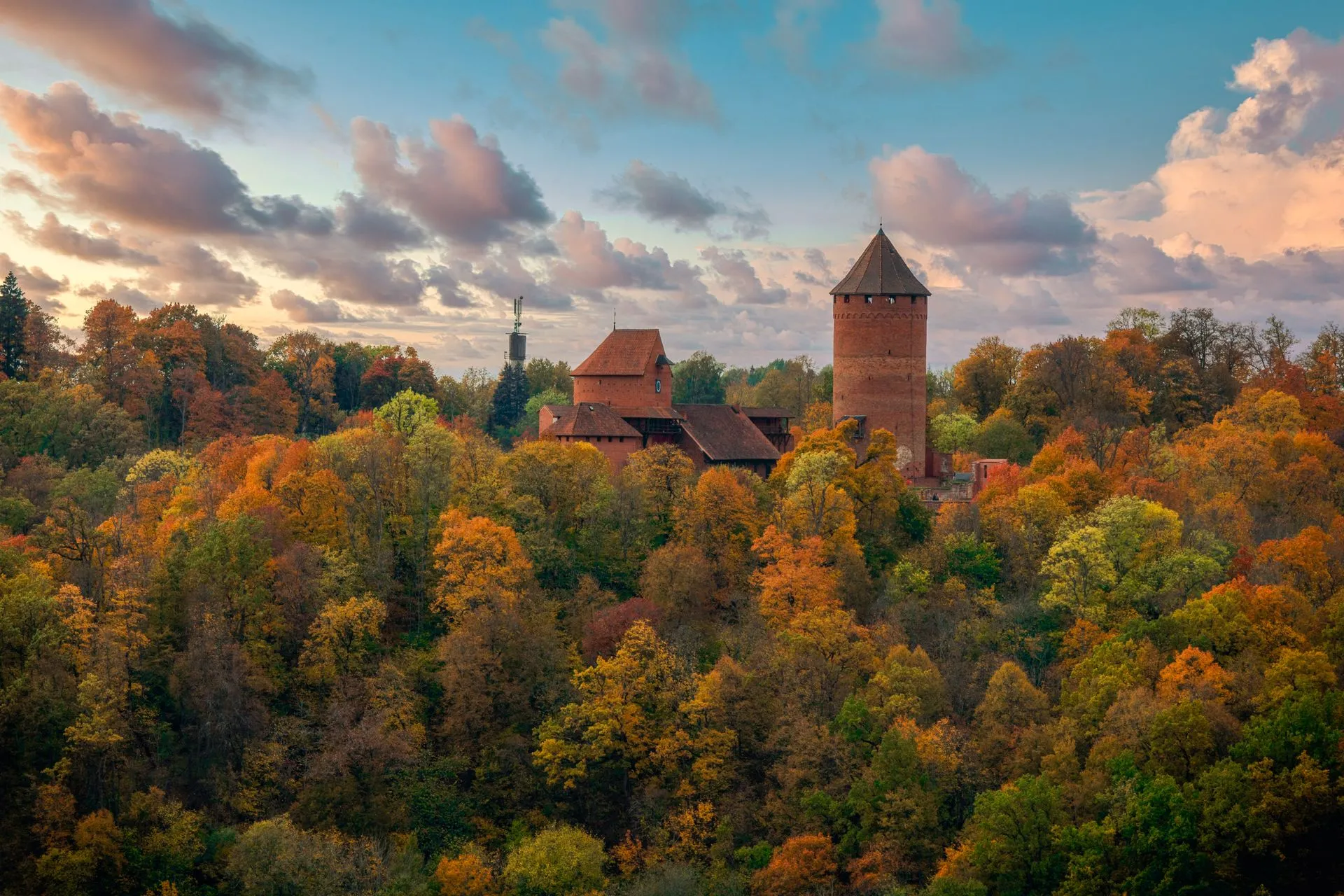
Lahemaa holds several restored Baltic German estates, and two of them repay a stop. Sagadi’s manor complex dates back five hundred years and now combines a forest and manor museum with a nature school and a working hotel and restaurant, all set around parkland ponds. It is the easiest of the manor houses to fold into a day trip.
Palmse, a Baroque estate built for the von der Pahlen family, is the more complete of the two. Its grand main house is a museum of manor life, with period interiors, a park, and outbuildings that include a distillery. The two sit within a short drive of each other, so a single afternoon covers both if you keep the pace up.
The manor grounds are free to wander. The museum interiors carry an entry fee in the single digits. Allow an hour for Sagadi and somewhat more for the fuller Palmse complex.
Altja and Käsmu
On the park’s north coast, Altja shows how Estonian seaside life used to work. The low wooden houses and boat sheds sit right on the water, with fishing nets and smokehouses kept the traditional way. It is a working village rather than a museum piece, and its small tavern is the natural place for a smoked fish lunch.
A short coastal path runs from the village to the shore, where the Baltic rocks and low cliffs of the park’s northern edge begin. The quieter alternative is Käsmu, a village further along the coast that locals call the Captain’s Village, home to a small maritime museum and a handsome row of old wooden houses. For more of Estonia’s coast on a bigger canvas, see the Saaremaa island guide.
The village itself is free to walk. Lunch at the tavern runs at local prices, and the whole stop fits into an hour on its own.
Jägala and Juminda
On the way in from Tallinn, before the park proper begins, Jägala is Estonia’s largest natural waterfall. In spring and after rain the broad curtain of water spills over a limestone ledge with real force; in a hard winter it freezes into a wall of ice. Either way it is an easy roadside stop that needs twenty minutes.
Farther north, the Juminda peninsula reaches out into the Baltic at the park’s northern tip, with quiet forest roads and a lighthouse at its end. It is the emptiest corner of Lahemaa, worth a detour if the full day still has room and you want to see the coast at its most remote.
Both stops are free. Jägala works as a quick opener before the bog; Juminda is an optional finish on the way back toward Tallinn.
Practical info
6 readingsGetting there
The park begins about an hour east of Tallinn on the E20, the main road toward Narva. Buses run along the same corridor, but a car is the practical way to reach the spread-out stops. From Tallinn’s center expect about an hour and a quarter to the Viru Bog trailhead.
Getting around
The bog, the manors, and the villages sit in different corners of the park, so a car is the backbone of a day trip. Without one, plan around the bus and accept more walking. The road network is quiet and well signed.
Budget
The trails, boardwalks, and manor grounds are free. Museum interiors and a tavern lunch bring the day to a modest total, often cheaper than a full day inside Tallinn’s old town. Allow for fuel and parking on top.
When to visit
The park works year-round. Late spring and autumn bring the richest colors on the bog and the fewest people. Winter turns the bog and waterfall into an ice-cold, quiet scene, and summer offers the warmest time for the coastal villages. Early morning light is best on the boardwalk.
Duration
A single long day from Tallinn covers the bog, one or two manors, and a lunch stop in a fishing village. If the bog stays high on your list, half a day is enough for it alone. Heavy hikers can stretch the visit to two days and overnight in the park.
What to eat
Smoked fish is the meal of the day at Altja, served with dark rye bread. The manor restaurants at Sagadi and Palmse cook more formal local fare. In the villages, a fresh catch of the day is the reliable choice whether it is trout, eel, or Baltic herring.
This post contains affiliate links. Booking through them earns a small commission at no extra cost to you, and helps keep the site running. Thank you if you do.
Frequently asked questions
How do I get to Lahemaa from Tallinn?
The park starts about an hour east of Tallinn on the E20, the main road toward Narva. Buses run along the same corridor, but a car is the practical way to reach the spread-out stops. From Tallinn's centre, expect about an hour and a quarter to the Viru Bog trailhead.
How long is the Viru Bog boardwalk?
The Viru Bog boardwalk runs in a six-kilometre loop and takes about three hours at a gentle pace. Wooden planks carry you over open bog where the water pools in a deep tea brown, and an observation platform rises above the treeline partway around.
Is Lahemaa worth a day trip?
Yes. A single long day from Tallinn covers the bog, one or two manors, and a fishing-village lunch. The boardwalks, manor grounds, and villages are free, and the cost of a full day out is often cheaper than a comparable day inside Tallinn.