Sigulda sits in the Gauja River valley, about an hour east of Riga by train. The town has around 12,000 residents and sits entirely inside Gauja National Park, Latvia’s oldest. The valley walls are sandstone, carved by glacial meltwater over thousands of years, and the forest runs right up to the edges of the streets.
The main draws are two castles you can see from each other across the valley, a cave with inscriptions dating to the 1600s, and a cable car that connects the two sides. People call it the “Switzerland of Latvia,” which oversells it, but the valley does have real depth: 80-meter drops from the clifftops to the river, and trails that wind through birch and pine forests thick enough to block out the town below.
Sigulda works as a day trip from Riga, and most visitors treat it that way. But a single day means rushing between the castles and skipping the trails. Two nights gives you time to walk the valley, eat properly, and see the sites without checking the clock. The town is small enough to walk everywhere, and the cable car handles the valley crossing. It is one of the best stops on a wider Latvia itinerary, pairing naturally with Riga and Jūrmala.
Entry fees across all sites sit between two and five euros. A full lunch with drinks runs under ten euros. The practical ceiling is low, which is one reason Sigulda draws both budget travelers and families looking for an easy weekend without a big bill.
Getting there
Hourly trains from Riga take about an hour and cost three to five euros. Buses run similar times. No car needed for the main sights.
Budget
Thirty to fifty-five euros a day covers accommodation, meals, and attractions. Entry fees sit between two and five euros.
Best time
Late May through June or September for long days and light crowds. July and August are the busiest months.
Duration
A day trip covers the castles and cave. Two nights lets you walk the valley and eat without rushing.
The castles of Sigulda
The Old Castle dates to 1207, built by the Livonian Order as a stone fortress on the clifftop. What remains are thick limestone walls, a partial tower, and inner courtyards open to the sky. The Kropotkin family, who owned the land in the 1800s, let it decay while building their own residence nearby.
That residence is the New Castle, a neo-Gothic manor from 1878 with pointed arches and a terrace that faces the valley. It housed the Latvian Union of Writers during the Soviet period and now serves as the regional council. The building itself is not a museum in any deep sense, but the terrace view across to Turaida is worth the stop.
Walk the Old Castle ramparts in late afternoon, when the light comes through the arrow slits and the valley below goes gold. Entry to both sites runs two to four euros. Allow an hour for the ruins, less for the New Castle.
Turaida Castle
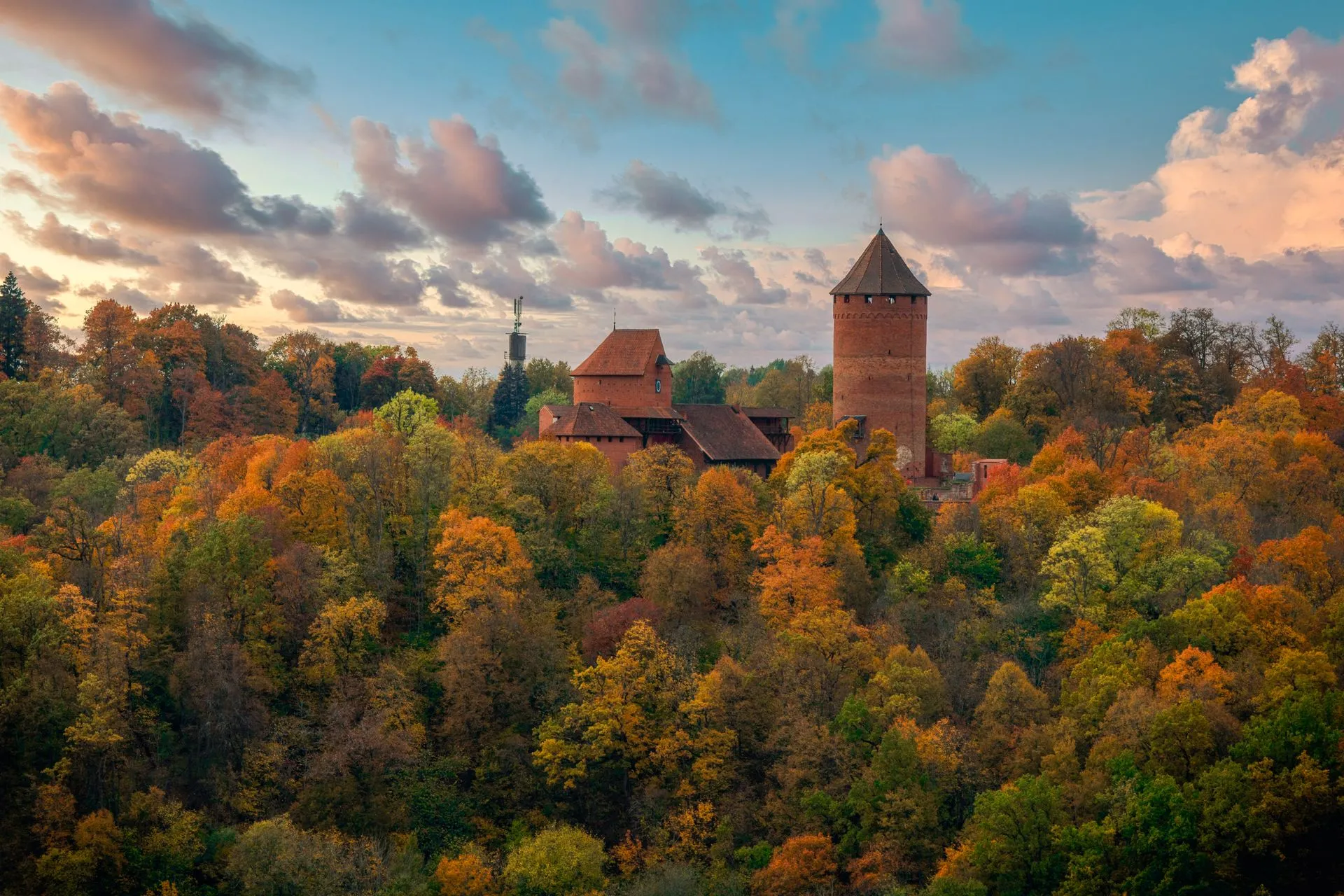
The red-brick castle on the opposite ridge is the most photographed building in Sigulda. Built by the Livonian Order in 1214, it survived wars that destroyed the other castles because it was abandoned after a fire in 1776 and left to molder rather than rebuild. The tower was restored in the 1970s and now houses an exhibition on the castle’s history.
The reserve extends beyond the castle walls. A wooded path leads to the Folk Song Hill, where stone sculptures mark Latvia’s choral tradition. The grounds include an old wooden church and several historic buildings spread across the parkland.
The climb to the tower viewpoint takes five minutes and delivers a panorama of the entire Gauja valley, with Sigulda’s castles visible across the river. Entry is around three euros. Budget two hours for the castle, paths, and song hill combined.
Gūtmaņa cave
The largest cave in the Baltics and Latvia’s oldest tourist attraction. The sandstone walls rise to about ten meters, and the cave stretches back roughly twenty meters. The walls are covered in inscriptions, some from the 1600s, others from the 1800s, and a few recent ones despite the prohibition.
A spring flows at the back of the cave. Local legend says the water brings luck in love, which has kept the site busy for centuries. The cave sits at the base of the valley, a fifteen-minute walk from the cable car station on a marked trail that descends through the forest.
Free to enter. Visit in the morning to avoid school groups and catch the sunlight filtering through the trees above the entrance. Allow thirty to forty-five minutes.
Krimulda
A neo-classical estate from 1848, set on the valley’s eastern rim. The main building now operates as a rehabilitation center, but the grounds are open and the setting is quiet. The manor sits among gardens and outbuildings that once served the von Lieven family.
Adjacent to the manor are the ruins of a 14th-century Livonian Order castle, burned during the Polish-Swedish wars and never restored. The stone walls rise about three meters from the forest floor, covered in moss.
The manor has a hotel with dormitory beds at twelve euros, one of the few places in the Baltics where you can sleep in a historic estate on a budget. The cable car from Sigulda’s center drops you a fifteen-minute walk away.
The valley floor
The Sigulda cable car crosses the Gauja valley in three minutes, connecting the town center to the Krimulda side. The ride costs two euros and offers a slow aerial view of the river, the forest canopy, and the sandstone cliffs. In autumn, when the birch and maple turn, the view from the car is one of the best in Latvia.
The valley floor itself is worth exploring on foot. A trail follows the Gauja River past sandstone formations that date to the last ice age. Canoe rentals operate in summer from a small dock near the cable car station, and the river is calm enough for beginners.
The bobsled track
Sigulda’s bobsled and luge track hosts international winter competitions, but in summer you can ride a wheeled bobsleigh down the concrete course with a professional pilot. The run covers 1.2 kilometers, hits speeds around sixty kilometers per hour, and involves enough G-forces to keep your hands gripping the bar.
The experience costs between twenty and forty euros depending on the package. Book ahead on weekends. The track sits on the town’s eastern edge, a twenty-minute walk from the center or a short Bolt ride. In winter, the track becomes an ice run for the Latvian bobsled team and occasionally offers tourist runs.
Practical info
6 readingsGetting there
Trains run hourly from Riga’s Pasažieru station, taking about an hour for three to five euros. Buses depart from Riga’s central station with similar times. No car needed for the main sights.
Getting around
The cable car handles the valley crossing. Walking covers most sights within thirty minutes. Bolt works for the bobsled track and restaurants outside the center.
Budget
Thirty to fifty-five euros per day covers accommodation, meals, attractions, and transport. Most entry fees sit between two and five euros. Lunch with drinks runs under ten.
When to visit
Late May through June brings long days and manageable crowds. September is quieter, with cheaper accommodation and warm enough weather for hiking. July and August are peak season with full facilities.
Duration
A day trip covers the castles and cave. Two nights lets you hike the trails, try the bobsled, and eat at a proper restaurant without rushing.
What to eat
Try the rye bread with smoked fish, the venison medallions at Aparjods, or the domestic trout at Kungu Rija. Kaku Maja serves a budget buffet with good salad options.
This post contains affiliate links. Booking through them earns a small commission at no extra cost to you, and helps keep the site running. Thank you if you do.
Frequently asked questions
How do I get to Sigulda from Riga?
Trains run hourly from Riga's Pasazieru station, taking about an hour for three to five euros. Buses depart from Riga's central station with similar times. No car is needed for the main sights; the cable car handles the valley crossing.
How many days should I spend in Sigulda?
A day trip from Riga covers the castles and the cave. Two nights lets you walk the valley trails, try the bobsled, and eat at a proper restaurant without rushing.
What is Sigulda known for?
Sigulda sits in the Gauja River valley and is known for its medieval castles, the Gutmanis cave (the largest in the Baltics, with inscriptions dating to the 1600s), the valley cable car, and the bobsled and luge track used for international winter competitions.